
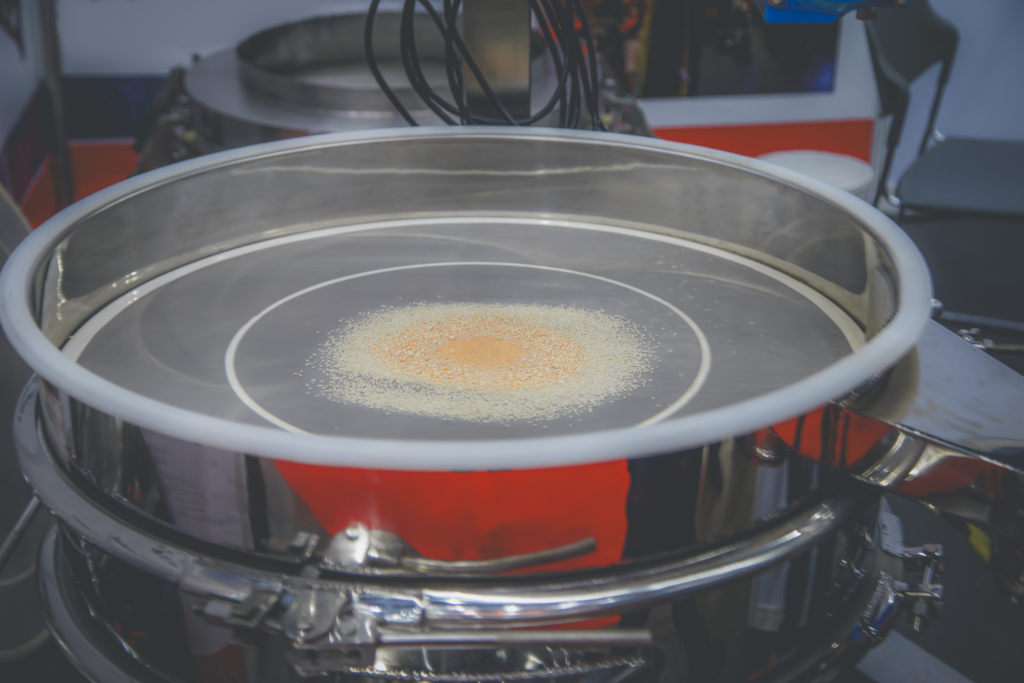
Industrial Sieving Guide, Sieve Mesh Size Chart, Micron Conversion and Vibratory Sieves
Industrial sieving is used across manufacturing industries to separate materials by particle size, remove contamination, and ensure consistent product quality. From plastic recycling plants to food production facilities and powder processing lines, screening equipment plays a critical role in maintaining efficient production and reliable material specifications.
One of the most important considerations when specifying screening equipment is selecting the correct sieve mesh size. The mesh determines which particles pass through the screen and which are retained, directly affecting product quality, process efficiency, and throughput.
This guide explains how industrial sieving works, how to select the correct mesh size, and how Rotajet vibratory sieves are used across multiple industries for reliable particle separation.
Rotajet screening systems are supplied through VibratingSieves.co.uk, providing industrial screening equipment for applications including recycling, food processing, chemical manufacturing, coatings, pharmaceuticals, ceramics, and metal powder production.

What Is a Vibratory Sieve?
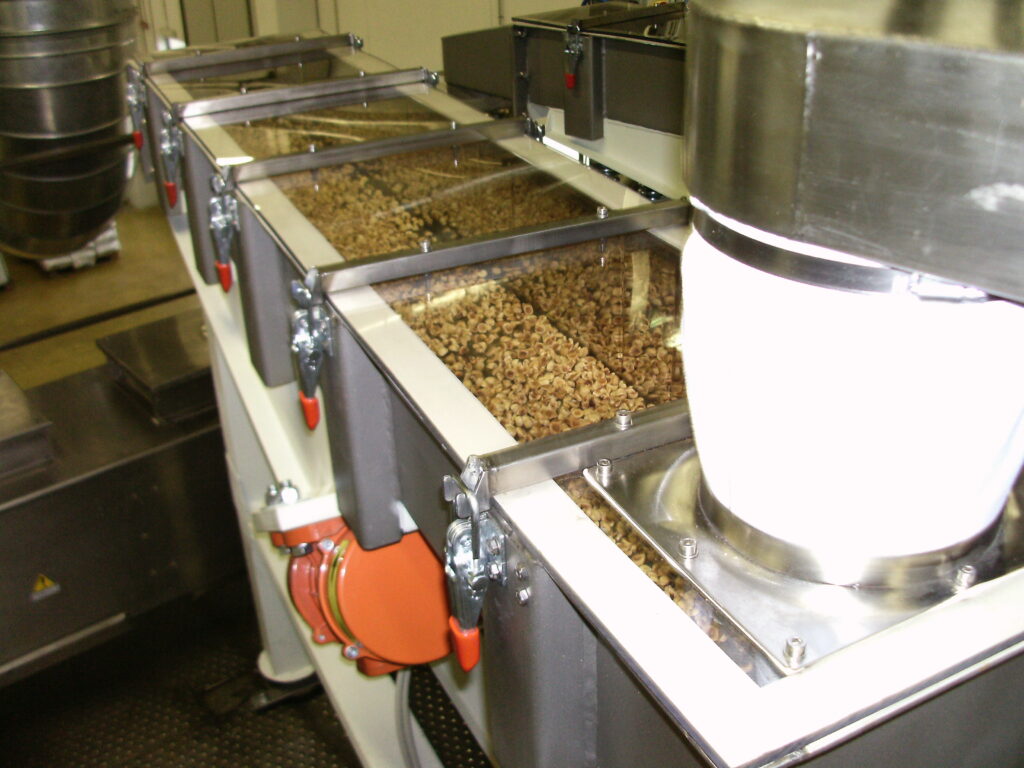
A vibratory sieve is an industrial screening machine used to separate particles based on size using a vibrating mesh screen.
Material is fed onto the mesh surface where vibration spreads the product evenly across the screen. Smaller particles pass through the mesh openings while larger particles remain on the screen surface and exit through a separate discharge outlet.
Vibratory sieves are widely used for:
- powder classification
- contamination removal
- particle size grading
- plastic recycling filtration
- pellet screening
- liquid-solid separation
Rotajet vibratory sieves, available through VibratingSieves.co.uk, are designed for continuous industrial operation and are widely used in applications requiring accurate particle separation and reliable screening performance.
Learn more about Rotajet screening machines here:
https://vibratingsieves.co.uk/vibration-sieves/
How Vibratory Sieves Work
Industrial vibratory sieves operate by applying controlled vibration to a mesh screen.
The screening process typically follows four stages.
1. Material Feed
Material enters the machine through the inlet and spreads across the screen surface.
2. Controlled Vibration
A vibrating motor causes the screen to move in a circular motion, distributing the material evenly across the mesh surface.
3. Particle Separation
Particles smaller than the mesh opening pass through the screen.
4. Oversize Discharge
Larger particles travel across the screen surface and exit through a separate outlet.
This process ensures consistent particle separation while maintaining high throughput.
Rotajet vibratory sieves can be configured with different mesh sizes and multiple screening decks depending on the application.
Typical Vibratory Sieve Sizes
Industrial vibratory sieves are available in several diameters depending on the required screening capacity and throughput.
| Machine Diameter | Typical Applications |
| 600 mm | laboratory and small production |
| 900 mm | medium throughput powder screening |
| 1200 mm | industrial screening |
| 1500 mm | high capacity bulk materials |
Rotajet vibratory sieves are available in multiple diameters depending on the screening capacity and the requirements of the application.
Sieve Mesh Size Chart
Mesh size refers to the number of openings in a screen per inch.
Microns represent the actual opening size of the mesh.
Below is a commonly used sieve mesh size chart for industrial screening applications.
| Mesh Size | Opening Size (Microns) | Typical Application |
| 20 Mesh | 850 µm | Plastic granules |
| 30 Mesh | 600 µm | Recycling materials |
| 40 Mesh | 425 µm | Powder screening |
| 60 Mesh | 250 µm | Food powders |
| 80 Mesh | 180 µm | Chemical powders |
| 100 Mesh | 150 µm | Fine powders |
| 140 Mesh | 106 µm | Pigments |
| 200 Mesh | 75 µm | Fine filtration |
| 325 Mesh | 45 µm | Metal powders |
Selecting the correct mesh size is essential for efficient screening and consistent product quality.
Rotajet vibratory sieves can accommodate a wide range of mesh configurations depending on the application.
Mesh vs Micron Conversion
Engineers frequently refer to both mesh size and micron size when specifying screens.
The difference is simple.
Mesh size refers to the number of openings per inch of screen.
Micron size refers to the physical opening dimension of the mesh.
Examples include:
- 40 mesh ≈ 425 microns
- 100 mesh ≈ 150 microns
- 200 mesh ≈ 75 microns
Understanding this conversion allows engineers to specify the correct screen when designing screening processes.
Choosing the Correct Mesh Size
Selecting the correct mesh size depends on several process factors.
Particle Size Distribution
The mesh opening must be smaller than the particles that need to be removed.
Throughput Requirements
Coarser meshes allow higher throughput while finer meshes provide tighter separation.
Material Properties
Moisture content, particle shape, and density can influence screening efficiency.
Contamination Removal
Sieves are commonly used to remove oversized particles or foreign materials from production processes.
Product Quality Requirements
Industries such as pharmaceuticals and food processing often require strict particle size control.
Rotajet engineers can assist with selecting the correct mesh size depending on the application.
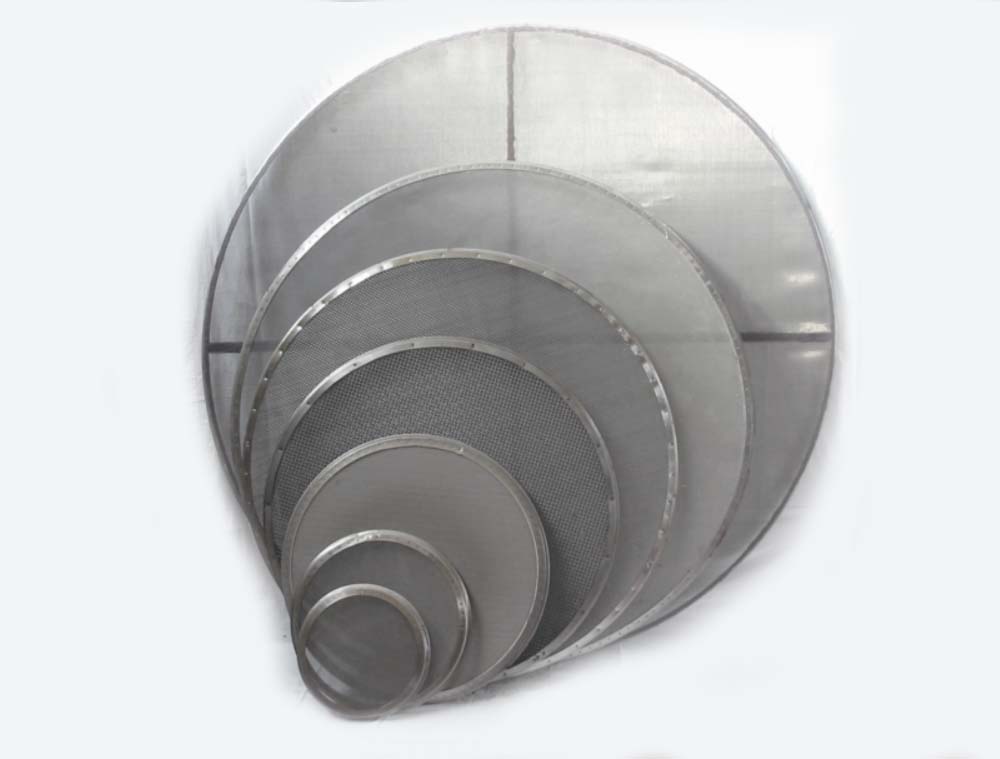
Preventing Mesh Blinding
Mesh blinding occurs when particles become trapped in the screen openings.
This is more common when screening:
- sticky powders
- moist materials
- irregular particles
To prevent this, vibratory sieves can be equipped with cleaning systems such as:
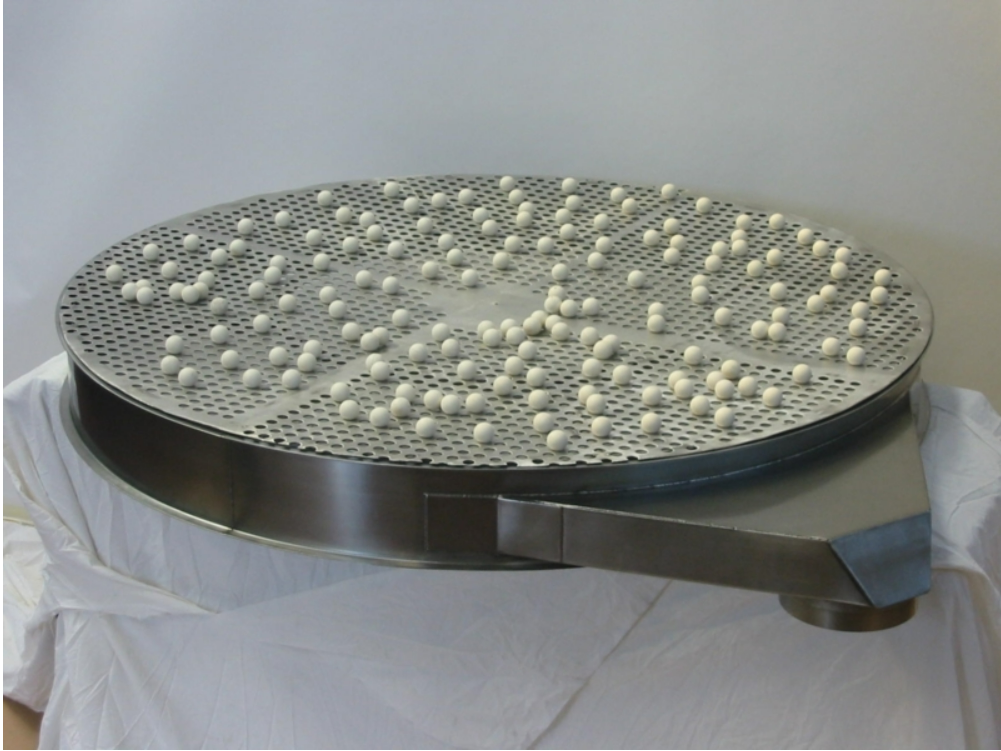
Ball Cleaning Systems
Rubber balls bounce beneath the screen to keep mesh openings clear.
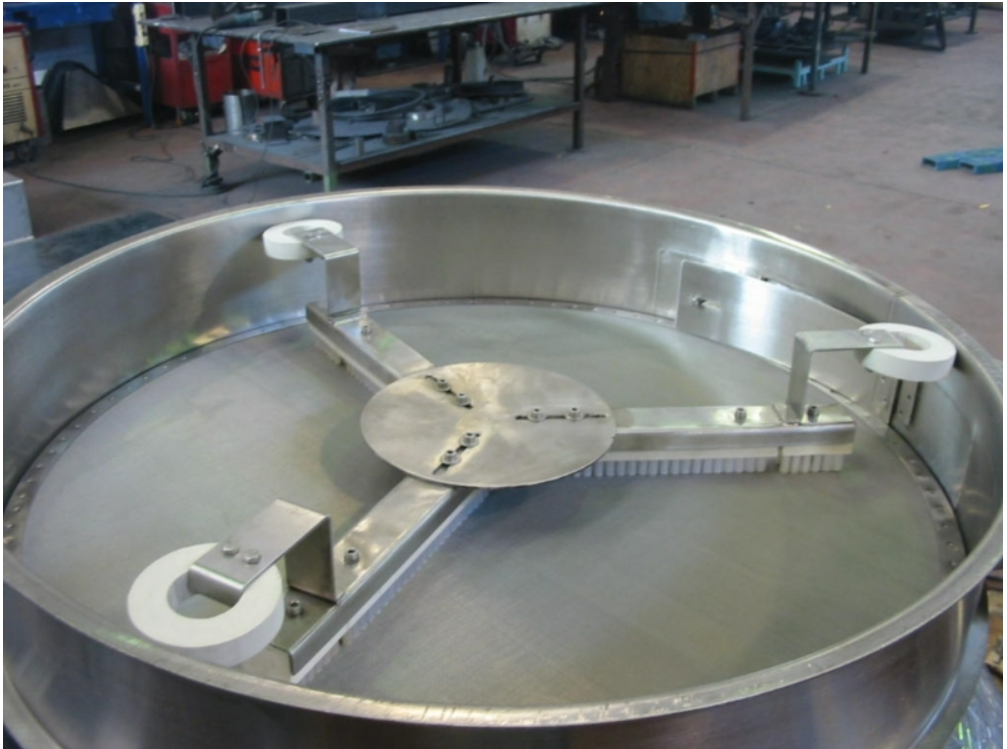
Brush Systems
Brushes sweep across the mesh surface to remove trapped particles.
Ultrasonic Deblinding
High-frequency vibration prevents fine powders from sticking to the mesh.
These systems help maintain screening efficiency and reduce maintenance downtime.
Industrial Sieving Applications
Industrial sieving equipment is used across many sectors.
Plastic Recycling Screening
In recycling plants, vibratory sieves remove fines and dust from shredded plastic.
Typical materials include:
- PET flakes
- HDPE flakes
- plastic granulate
- shredded film
Screening improves the quality of recycled plastic before pelletising.
https://vibratingsieves.co.uk/separation-in-plastic-recycling/
Food Powder Screening
Food manufacturers use vibratory sieves to ensure consistent particle size and remove contaminants.
Typical materials include:
- flour
- sugar
- starch
- milk powder
- spices
https://vibratingsieves.co.uk/food-beverage/
Coatings and Resins
Screening ensures coatings and resins remain free from contamination.
Typical materials include:
- powder coatings
- inks
- dyes
- adhesives
- resins
https://vibratingsieves.co.uk/coatings/
Pharmaceutical Separation
Pharmaceutical manufacturing requires strict particle classification and contamination control.
https://vibratingsieves.co.uk/pharmaceutical-separation/
Metal Powder Processing
Metal powders used in additive manufacturing and powder metallurgy require precise particle size classification.
https://vibratingsieves.co.uk/metal-powder/
Rotajet Vibratory Sieves
Rotajet manufactures high-performance industrial vibratory sieves designed for reliable screening in demanding production environments.
Rotajet screening systems are designed and manufactured in the UK and supplied globally to industries requiring accurate industrial particle separation.
Key features include:
- stainless steel construction
- high screening efficiency
- easy mesh replacement
- multi-deck configurations
- compact design
- continuous operation capability
Explore the machines here:

Buy, Rent or Contract Screening Equipment
Rotajet screening equipment can be supplied in several ways depending on operational requirements.
Purchase Equipment
Many companies purchase vibratory sieves as permanent equipment within their production lines.
Rental Options
Rental can be useful for temporary processing requirements or equipment trials.
Contract Screening
In some cases, materials can be processed externally using contract screening services before investing in new equipment.
Rotajet engineers can advise on the most suitable solution depending on production requirements.
Industrial Screen Remeshing Services
Over time, screen meshes wear due to abrasion and continuous operation.
When mesh becomes damaged or stretched, screening efficiency decreases and contamination may pass through the screen.
Rotajet provides remeshing services to replace worn screens and restore machine performance.
Benefits include:
- improved screening accuracy
- extended equipment life
- reduced downtime
- improved product quality
Remeshing can often be completed quickly, allowing production lines to return to operation with minimal disruption.
Further Industrial Sieving Resources
Further technical articles covering industrial screening equipment, vibratory sieve applications, and powder separation processes can be found in the Rotajet industrial sieving knowledge base.
https://vibratingsieves.co.uk/news/
Frequently Asked Questions
What mesh size should be used for powder screening?
Most powder screening applications use mesh sizes between 60 mesh and 200 mesh, depending on particle size requirements.
What mesh size removes fines from plastic granulate?
Plastic recycling processes commonly use 20–40 mesh screens to remove fines and dust.
What is the difference between mesh and micron?
Mesh refers to the number of openings per inch of screen, while micron refers to the physical opening size.
Can vibratory sieves process wet materials?
Yes. Vibratory sieves can process moist materials, although mesh cleaning systems may be required to prevent blinding.
How often should sieve mesh be replaced?
Mesh replacement depends on operating conditions and material abrasiveness. Regular inspection ensures consistent screening performance.
Visit Vibrating Sieves to learn more or to get in contact with us.