

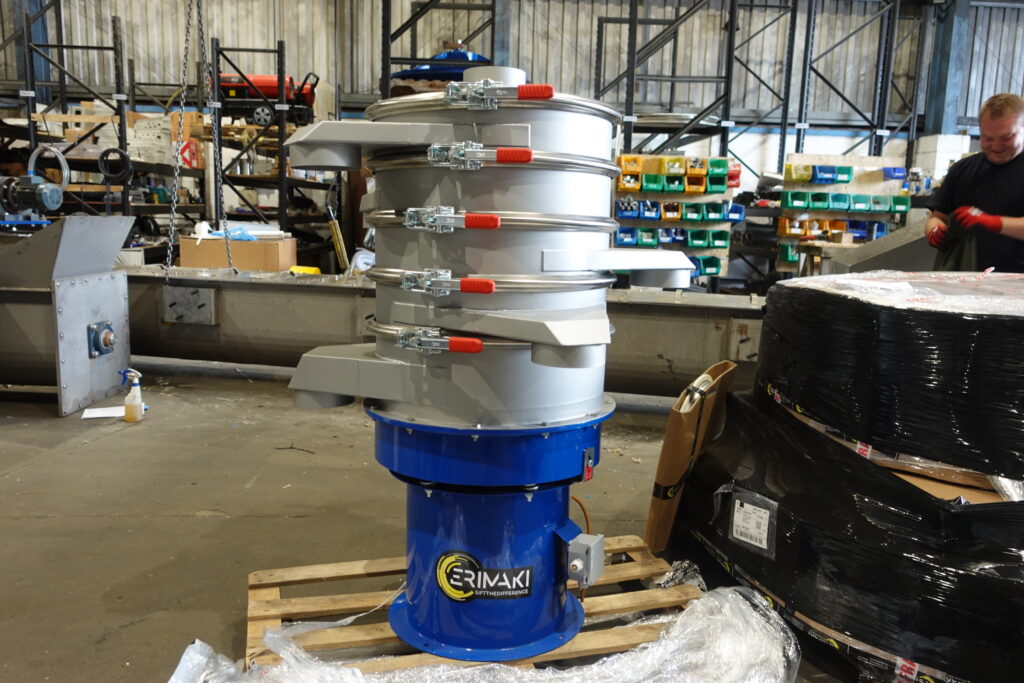
Vibratory sieves are widely used in industrial processes to separate particles according to size. They are critical machines in industries such as food processing, pharmaceuticals, chemicals, plastics recycling and powder manufacturing.
However, screening performance can vary significantly depending on factors such as material characteristics, mesh selection and machine configuration.
Improving vibratory sieve efficiency helps manufacturers increase throughput, reduce downtime and maintain consistent product quality.
Rotajet supplies industrial vibratory sieves designed for accurate particle separation across a wide range of industrial processes, helping companies improve screening efficiency and maintain reliable production.
What Is Screening Efficiency?
Screening efficiency describes how effectively a vibrating sieve separates particles based on size.
Efficient screening ensures:
- correctly sized particles pass through the mesh
- oversize particles remain on the screen surface
- throughput is maintained without excessive blockage
Several factors influence screening efficiency including:
- particle size distribution
- mesh aperture size
- vibration amplitude
- feed rate
- material moisture content
Rotajet designs industrial vibratory sieves engineered to deliver consistent screening performance across demanding industrial applications.
Common Causes of Poor Vibratory Sieve Performance
Several issues can reduce screening efficiency.
Understanding these factors allows operators to improve sieve performance.
Mesh Blinding
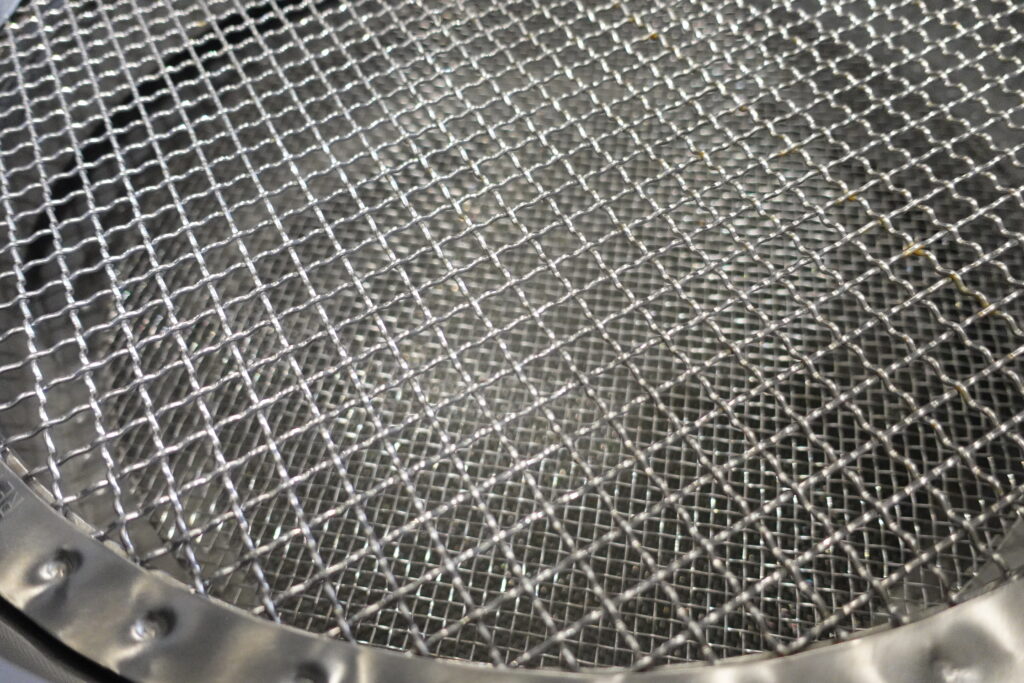
Mesh blinding occurs when particles become lodged in the mesh apertures, reducing the open screening area.
This typically occurs when:
- particles are close in size to the mesh opening
- materials contain moisture
- powders are sticky or oily
- particles agglomerate during processing
Incorrect Mesh Selection
Choosing the wrong mesh aperture size can significantly reduce screening performance.
If mesh openings are too small, material may struggle to pass through.
If openings are too large, separation accuracy decreases.
Uneven Material Feed
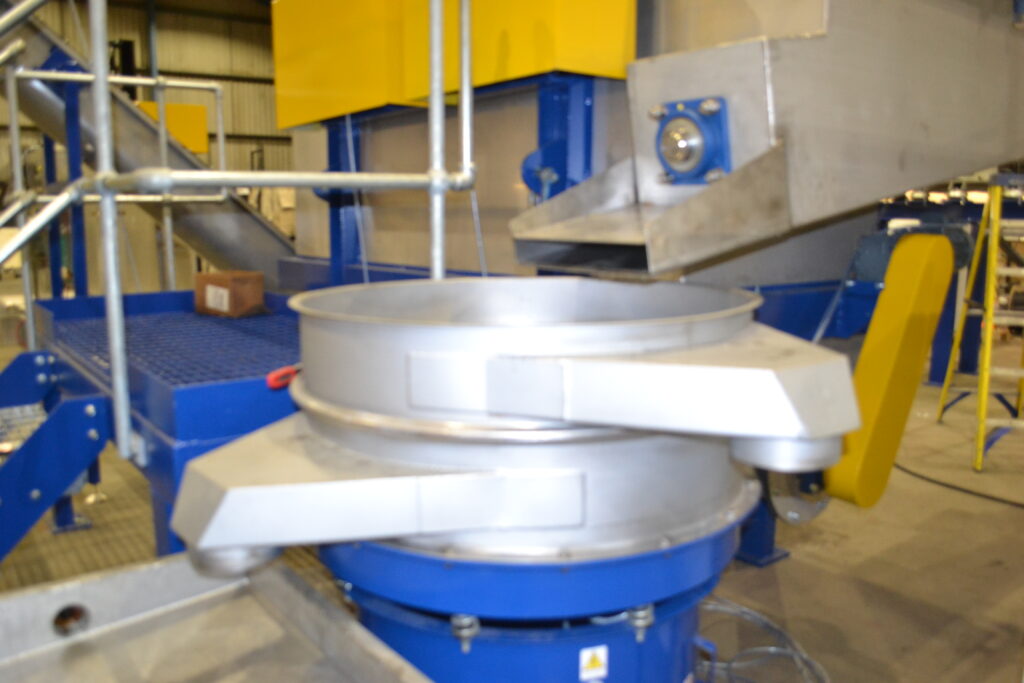
Poor distribution of material across the screen surface reduces effective screening area.
Feed should be evenly distributed to maximise mesh utilisation.
Incorrect Vibration Settings
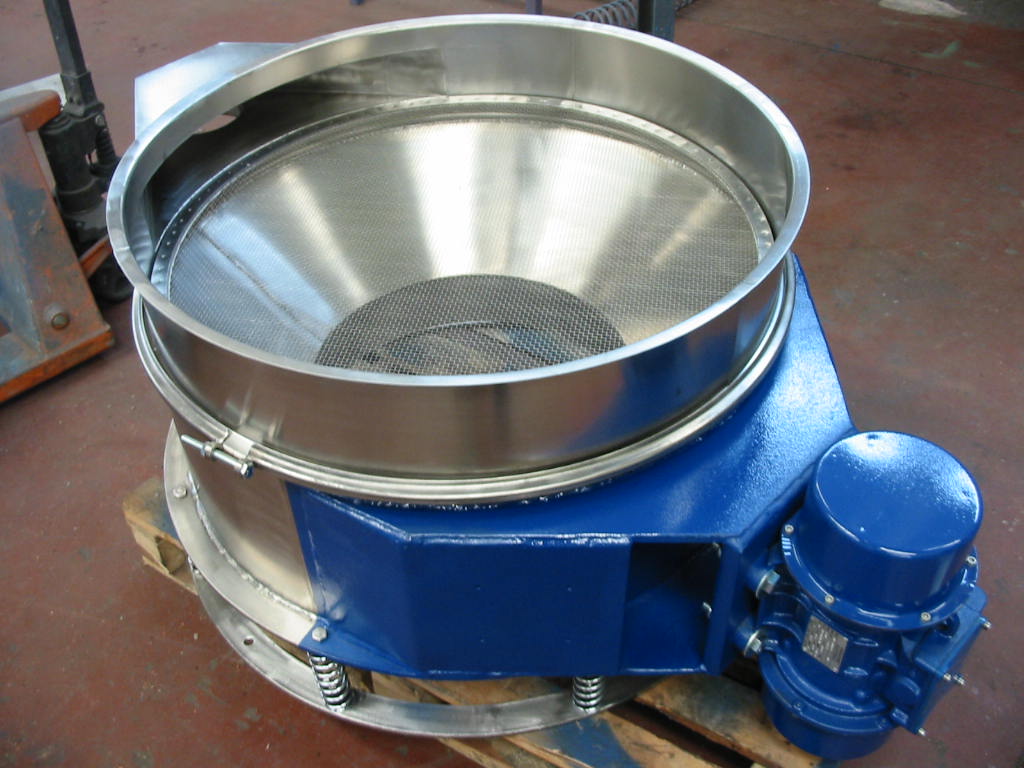
Incorrect vibration amplitude or motor configuration can reduce particle stratification.
Industrial sieving machines must be correctly configured for the material being processed.
How to Prevent Mesh Blinding
Mesh blinding is one of the most common problems encountered in industrial sieving operations.
Several methods can help reduce the risk.
Self-Cleaning Systems
Many industrial vibratory sieves incorporate self-cleaning mechanisms, including:
- bouncing ball systems
- slider cleaning systems
- ultrasonic mesh cleaning
These systems help keep mesh apertures clear during operation.
Correct Mesh Selection
Selecting the correct mesh size based on particle distribution is essential to prevent mesh blockage.
Particle size analysis is often used to determine the optimal mesh size.
Material Conditioning
Reducing moisture content or breaking particle agglomerates can significantly improve screening performance.
Proper Machine Configuration
Correct vibration settings, feed rate and machine design all affect screening efficiency.
Rotajet vibratory sieves are engineered to provide consistent vibration and reliable particle separation for demanding industrial processes.
Improving Throughput in Vibratory Sieves
Throughput is another important factor in industrial screening.
Several design and operating factors influence sieve capacity.
Increasing Screening Area
Larger mesh surfaces allow more material to pass through the screen.
Optimising Feed Rate
Excessive feed rates can overload the sieve surface.
Material should be fed evenly to maintain efficient separation.
Correct Vibration Amplitude
Correct vibration amplitude improves particle stratification and allows smaller particles to reach the mesh.
Multi-Deck Screening
Multi-deck vibratory sieves allow several particle fractions to be separated simultaneously.
Rotajet engineers design vibratory sieves capable of handling demanding industrial screening processes while maintaining high throughput.
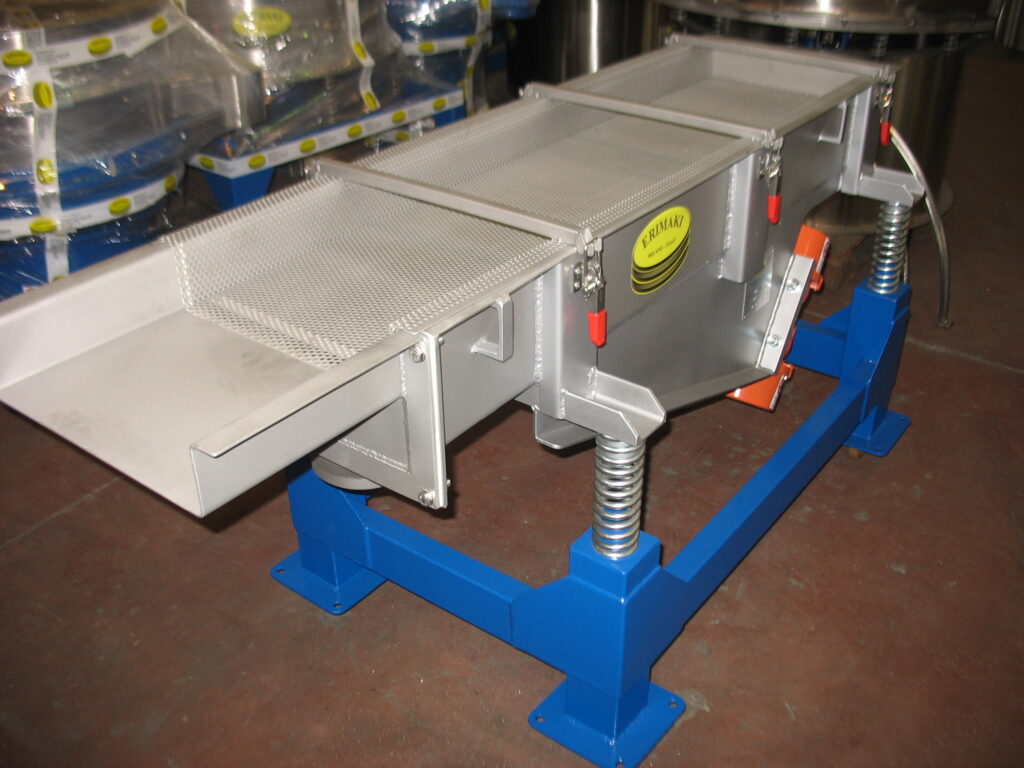
Industrial Applications of Vibratory Sieves
Vibratory sieves are used across many industries to separate powders, granules and liquids.
Common applications include:
- food powder screening
- pharmaceutical powders
- chemical powders
- plastics recycling
- pellet screening
- metal powder processing
Rotajet vibratory sieves are used in many industries where accurate particle separation is essential.
Choosing the Right Vibratory Sieve
Selecting the correct vibratory sieve depends on several factors including:
- particle size distribution
- throughput requirements
- mesh aperture size
- product characteristics
- required separation accuracy
Rotajet engineers work with customers to determine the most suitable industrial sieving solution for each application.
Buy, Rent or Contract Screening Solutions
Companies installing vibratory sieving equipment often have several options depending on their production requirements.
Buy Vibratory Sieves
Installing a Rotajet vibratory sieve allows manufacturers to integrate screening directly into their production process.
Rent Screening Equipment
Companies may choose to rent sieving equipment during production trials or short-term processing increases.
Contract Screening
Some companies choose to outsource screening processes to contract processing facilities using industrial vibratory sieves.
Rotajet machinery is widely used in industrial processing environments where reliable particle separation and screening efficiency are essential.
Vibratory Sieve Trials at Rotajet’s Wakefield Facility
Selecting the correct vibratory sieve often depends on the characteristics of the material being processed.
To support customers in selecting the most suitable equipment, Rotajet operates a trial facility at its engineering centre in Wakefield, UK, where screening trials can be carried out.
At this facility customers can evaluate:
- screening efficiency
- mesh performance
- throughput capacity
- particle size separation
- material flow characteristics
These trials allow companies to test materials before investing in full-scale sieving equipment, ensuring the correct machine configuration is selected.
The Wakefield facility also allows materials to be tested alongside other processing equipment used in recycling and material processing lines, helping companies understand how materials behave across the full process.
Companies interested in trials can contact Rotajet to arrange material screening trials at the Wakefield facility.
Rotajet Vibratory Sieves
Rotajet supplies industrial vibratory sieves designed for accurate particle separation across a wide range of industrial processes.
These machines are used to screen:
- powders
- granules
- pellets
- liquids
- recycled materials
Rotajet separation machinery is used in industries where consistent screening performance and reliable particle separation are essential.
Conclusion
Improving vibratory sieve efficiency is essential for maintaining consistent screening performance in industrial processes.
Factors such as mesh selection, vibration configuration, feed rate and material characteristics all influence screening performance.
By selecting the correct equipment and optimising operating conditions, manufacturers can significantly improve screening efficiency.
Modern industrial vibratory sieves such as those supplied by Rotajet allow companies to achieve reliable and efficient particle separation across many industrial applications.
Visit Vibrating Sieves to learn more or get in contact with us.