
100 questions about how Vibrating Sieves Keep Your Production Flowing Smoothly
Industrial sieving is vital for separating, classifying, and refining materials across manufacturing and recycling. From powders and granules to liquids, vibrating sieves keep production efficient and product quality consistent.
In this guide, we answer 100 essential questions about industrial sieving—covering how it works, why it matters, and how to choose the right sieve for your process.
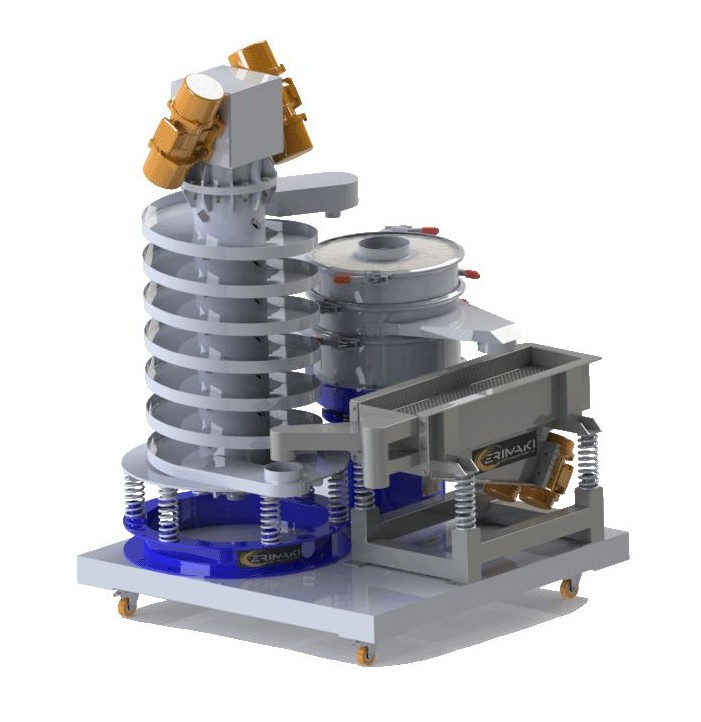
What is an industrial sieve?
An industrial sieve (also referred to as a screener or separator) is a piece of equipment used to separate materials by particle size, remove impurities (oversize or unwanted contamination), or classify a material into different size grades. It is used in bulk powders, granules, slurries or liquids.
What types of sieving machines exist?
Common types include vibratory sieves (vibratory screeners), rotary sifters, centrifugal sifters, ultrasonic de-blinding sieves, liquid-solid separation sieves, and multi-deck classification screeners.
What is a vibratory sieve?
A vibratory sieve uses vibration (mechanically or electronically induced) to encourage material to move across a mesh screen, enabling smaller particles to pass through the apertures while larger particles or contaminants are retained or diverted.
What is the main purpose of sieving in an industrial process?
The purpose is to enhance product quality (by removing oversize/inappropriate particles or contamination), ensure consistency (by controlling particle size distribution), protect downstream equipment, comply with regulatory standards (especially in food/pharma) and improve process efficiency.
How does sieving differ from other separation processes like filtration or sedimentation?
Sieving relies purely on physical screening (mesh apertures) and vibration or motion to separate by size; filtration generally uses membranes or porous media to remove particles from fluids; sedimentation relies on gravity to allow heavier particles to settle. Sieving is ideal for inline particle sizing and impurity removal.
What are typical mesh aperture sizes in industrial sieves?
Mesh apertures can range from several millimetres down to micron-scale (for example 20-100 µm or finer) depending on the application. The finer the mesh, the more challenging the screening (in terms of blinding, throughput, etc.).
What factors influence the performance of an industrial sieve?
Key factors include: mesh aperture size, mesh open area, material feed characteristics (size distribution, moisture, stickiness, density), machine vibration amplitude/frequency, screen geometry, feed rate, lining and materials of construction, maintenance access, and process integration.
What is blinding in sieving equipment?
Blinding occurs when the openings in the mesh get plugged or clogged by particles or material agglomerates, inhibiting flow of desired particles through the mesh and reducing efficiency/throughput.
How does a high-efficiency sieve design address blinding?
Features include: ultrasonic de-blinding systems, high vibration amplitude/frequency optimised for the material, open-area mesh with appropriate opening geometry, coatings or anti-adhesive mesh, straight-through design for flow, and easy access for cleaning/mesh removal.
Why is proper specification of sieving equipment critical?
Because incorrect specification (wrong mesh size, inadequate capacity, wrong vibration profile, unsuitable material construction) can lead to low throughput, high maintenance, poor separation, blinding, increased downtime and higher overall cost of ownership.
What sets Rotajet sieves apart from standard industrial sieves?
Rotajet sieves are engineered for robust industrial performance, with features such as optimised vibration profiles, easy-change meshes, hygienic construction, versatile for both dry powder and wet slurry separation, customised integration into production lines and strong after-sales service.
How does Rotajet support both dry and wet applications?
The design flexibility of Rotajet machines includes options for dry powder vibration screening, liquid-solid separation, slurry sieving, with suitable materials of construction (e.g., stainless steel, hygienic finish), modular mesh changes, sealed housings for dust/liquid containment and optional accessories (e.g., ultrasonic de-blinding, quick-release mesh clamps).
How does Rotajet increase throughput and reduce downtime?
By combining optimised vibration motion, straight-through flow geometry (minimal directional changes), high open-area mesh, fast tool-free mesh change, minimal dead volume, and simplified cleaning access, Rotajet machines enable higher throughput and minimal downtime for maintenance or product change-overs.
What materials of construction are available for Rotajet sieves?
Rotajet offers units constructed in stainless steel (e.g., 304/316) for hygienic or corrosive environments; specialised alloys or coatings for abrasive materials; sealed housings for containment; and customised finishes for food/pharma (smooth surfaces, CIP/SIP compatibility).
Can Rotajet sieves be customised for specific applications?
Yes — Rotajet provides customisation of mesh size, number of decks, vibration frequency/amplitude settings tailored to material characteristics, inlet/outlet geometry, integration with feeders/conveyors, and optional add-ons like ultrasonic de-blinding, metal detection integration, air-knife cleaning and rapid mesh change mechanisms.
What maintenance and cleaning features do Rotajet machines offer?
Fast mesh change systems (tool-free or minimal tools), large access doors, hygienic design to reduce crevices and dead zones, quick disassembly of critical components, easy inspection of mesh condition, and documentation/training support for preventive maintenance.
How does Rotajet ensure product purity and compliance (especially for food & pharma)?
Through hygienic materials and finishes, sealed housings to prevent contamination or dust escape, CIP/SIP compatibility, validated mesh apertures, documentation (material certificates, mesh calibration), containment options (for powders with OEL considerations) and capability to detect/remove oversized particles or foreign matter.
What is the typical lifecycle cost benefit of choosing a Rotajet sieve?
Lower maintenance downtime, faster product changeovers, reduced risk of product rejects or contamination, improved throughput, lower mesh replacement frequency (if optimised), and higher process reliability all contribute to lower total cost of ownership over machine life.A vibratory sieve uses vibration (mechanically or electronically induced) to encourage material to move across a mesh screen, enabling smaller particles to pass through the apertures while larger particles or contaminants are retained or diverted.
How does Rotajet support retrofit or upgrade applications?
Rotajet can assess existing sieving equipment, identify bottlenecks (mesh blinding, capacity shortfall, maintenance intensity), and provide retrofit units or upgrades (e.g., new mesh frames, vibration technology, containment features) to improve performance without full line replacement.
What after-sales service and support does Rotajet provide?
Rotajet offers start-up and commissioning support, mesh calibration and supply programmes, preventive maintenance contracts, spare parts availability, training for operators, application testing (in-house or on-site), and process optimisation consultancy to maximise machine performance.
What are typical powder applications for industrial sieves?
Common powder applications include flour, starch, sugar, cocoa, spices, pigments, metal powders, chemical powders, pharmaceutical active ingredients/excipients, plastic granules, coatings and battery materials. Screening ensures removal of oversized agglomerates, contamination and ensures consistent particle size distribution.
How does Rotajet handle abrasive or high-density powders?
For abrasive or high-density powders (e.g., metal powders, mineral powders), Rotajet offers hardened mesh options, reinforced construction, optimised vibration amplitude/frequency for heavier materials, wear-resistant linings, and appropriate feed/spout geometry to prevent mesh damage and maximise throughput.
What considerations apply for sticky or moist powders?
Sticky or moist powders challenge sieving due to tendency to agglomerate or adhere to mesh. Rotajet addresses this by offering anti-adhesive mesh coatings, ultrasonic de-blinding options, air-knife or spray systems to assist material flow, adjustable vibration settings, and mesh surface treatments to minimise material build-up.
Can Rotajet sieves be used for granules or pellets?
Yes. For granules or pellets the mesh aperture is larger, vibration settings are adjusted for efficient passage, and oversize removal or granule grading can be achieved. Rotajet’s flexible design accommodates granule screening or secondary contaminant removal.
How important is mesh selection in powder sieving?
Critical. Mesh aperture size must match the required cut-size (pass/retained particles). The mesh open area must be sufficient for throughput. Material of mesh must suit product characteristics (abrasiveness, corrosion, hygiene). Incorrect mesh leads to poor separation, high maintenance and downtime.
What is a multi-deck sieve and when is it used?
A multi-deck sieve has multiple screen layers stacked, each with different mesh apertures. This allows one machine to separate into two or more size fractions in a single operation (e.g., reject oversize, pass desired size then remove fines). Rotajet offers multi-deck configurations for complex screening requirements.
How does Rotajet support fine powders (e.g., < 100 µm)?
Fine powders require high precision and anti-blinding measures. Rotajet can offer fine-mesh (µm-scale) screens, ultrasonic de-blinding modules, high vibration frequency, sealed housings to contain dust, and modified feed/overflow geometry to maintain performance in fine powder applications.
What are anti-blinding or de-blinding systems and why are they needed for powders?
Anti-blinding/de-blinding systems (such as ultrasonic mesh vibration, air-knife cleaning, mesh coating) help prevent mesh blocking by sticky, fine or moist powders. They are especially needed when handling very fine meshes or sticky materials to maintain throughput and separation efficiency.
How does Rotajet ensure consistent particle size distribution?
Through careful matching of mesh aperture to required cut-size, optimised vibration parameters, consistent feed control, high open-area mesh to avoid bottlenecks, and thorough design verification/testing. This ensures the final product meets specification, reduces rejects and improves downstream processing.
What role does sieving play in powder handling safety and quality control?
Sieving removes oversized contamination (foreign material, lumps), ensures uniform particle size (improves downstream process behaviour), reduces risk of dust/fines escape (important for OELs and worker safety), and ensures quality compliance (especially in food and pharmaceutical industries).
What is wet sieving or liquid-solid separation?
Wet sieving involves separating solids from liquids or slurries via a mesh screen under vibration or flow, often used to remove suspended solids, oversized particles or contamination from a liquid stream. It is widely used in chemical, wastewater, mining, food slurry and mineral processing.
. How does Rotajet manage slurry or high-moisture applications?
Rotajet designs for wet applications include sealed housings, corrosion resistant materials, suitably sized mesh apertures for suspensions, adjustable vibration profiles to prevent clogging or build-up, and overflow or discharge spouts to manage liquid flow and solids removal.
What are key design challenges for wet sieving?
Challenges include clogging/blinding by wet material, managing liquid flow rate, maintaining screen integrity in corrosive or abrasive slurries, ensuring proper discharge of solids and liquids, preventing splash-out or dust escape, and ensuring ease of cleaning and maintenance.
In what industries is wet sieving commonly used?
Industries include chemical processing, mineral/ore processing, wastewater treatment, food processing (liquid food ingredients, pulp slurries), and recycling (e.g., slurries with fines). Screening literature confirms wet screeners are used across these areas.
How does mesh aperture differ for wet sieving compared with dry sieving?
Wet sieving often uses larger apertures to allow passage of liquids while retaining solids, or may use finer apertures if the goal is to remove very fine solids from a liquid. Also, mesh materials may differ (corrosion resistant, stainless, special coatings) and support structure needs to manage fluid load.
What maintenance considerations apply for wet sieves?
Frequent inspection for corrosion or wear, cleaning of liquid/solid channels to prevent clogging, ensuring seals and gaskets remain effective, monitoring mesh condition (especially in abrasive slurries), and validating discharge paths for liquids/solids to prevent back-pressure or flooding.
How does Rotajet ensure hygienic design for wet applications in food & beverage?
By using sanitary materials (food-grade stainless steel), smooth welds, CIP/SIP compatibility, sealed housings to prevent ingress/egress of liquids or contaminants, quick-release access panels for cleaning, and compliance with hygiene standards.
What are key design challenges for wet sieving?
Splash-proof housings, sealed discharge ports, proper drainage, anti-corrosion finish, access doors with safety interlocks, automatic shutdown in case of overflow or blockage, and operator training on hygiene/regulatory requirements.
How does screening performance (throughput/efficiency) compare for wet vs dry applications?
Wet applications may operate at lower throughput due to liquid load, risk of mesh clogging, higher maintenance overhead, and additional system requirements (liquid handling, pumps, drainage). However with optimised design (as provided by Rotajet) they can achieve high efficiency and stable performance.
Can Rotajet sieves handle suspended solids removal in wastewater or industrial process liquids?
Yes. Rotajet’s wet-sieving solutions are suitable for liquid-solid separation, removing suspended solids, oversized particles or contamination from process liquids or wastewater streams, helping maintain downstream equipment, ensure compliance and improve product or fluid quality.
How are industrial sieves used in the food & beverage industry?
In food & beverage, sieves remove foreign bodies, lumps or agglomerates, ensure uniform particle size of ingredients (powders, sugar, flour, spices), sieve liquid or semi-liquid food ingredients, support hygienic production, reduce waste and improve product quality.
What features are important for sieves in food & beverage?
Hygienic design (smooth welds, stainless steel, CIP/SIP compatibility), containment of dust or fines, quick cleaning, no dead zones, sealed housings to avoid contamination, rapid mesh change for product changeovers, certification or documentation for food contact materials.
How do Rotajet sieves support food & beverage applications?
Rotajet offers food-grade stainless steel construction, immediate access for cleaning, sealed housings, suitable vibration profiles for food powders (e.g., cocoa, sugar, flour), rapid tool-free mesh changes for different products and documentation for food safety compliance.
What role do industrial sieves play in pharmaceutical manufacturing?
In the pharmaceutical sector sieving is critical for “check-screening” powders (active ingredients, excipients) to remove oversized contamination, ensure particle size consistency, support GMP compliance, protect downstream equipment and ensure final product quality.
What special considerations apply in pharmaceutical sieving equipment?
Containment of dust (especially with potent APIs), hygiene and cleanability, validation and documentation, traceability of mesh and calibration, prevention of cross-contamination, OEL (Occupational Exposure Limit) compliance, safe access for maintenance, seamless integration into production line.
How does Rotajet meet pharmaceutical market needs?
Rotajet provides containment options (for dust control or potent powders), GMP-compliant stainless steel finishes, validated mesh aperture documentation, rapid mesh change systems to support frequent product changeover, and support for integration into clean-room or controlled manufacturing environments.
What about chemical & coatings industries?
In chemicals & coatings, sieves are used to remove oversized particles or agglomerates, classify powder pigments, ensure coating consistency, separate granules, handle abrasive or corrosive materials, and support high throughput processes.
How does Rotajet handle abrasive or corrosive materials in chemical applications?
Rotajet offers materials of construction (corrosion-resistant stainless steel, special alloys, liners/coatings), hardened mesh options, tailored vibration settings to manage abrasive content, sealed housings for fugitive dust/particles, and ease of maintenance for demanding chemical processes.
What applications exist for sieves in recycling or additive manufacturing?
In recycling, sieves help screen granulated plastics, separate contaminants, classify reclaimed materials. In additive manufacturing, sieves are used to classify metal powders or polymer powders, remove oversized agglomerates and ensure consistency for 3D-printing feedstock.
How can Rotajet assist in recycling/AM (additive manufacturing) powder handling?
Rotajet sieves are designed for high throughputs, quick mesh changes, fine mesh capability (for metal powders), containment design (for dust/fines), and flexible construction to handle polymer or metal powders, supporting efficient screening in recycling or AM feedstock preparation.
What is wet sieving or liquid-solid separation?
Checklist items include: feed material characteristics (particle size, moisture, density, abrasiveness), required cut-size (mesh aperture), required throughput (kg/hour or tons/hour), machine footprint and line integration, cleaning/maintenance time, re-mesh/changeover time, material of construction, vibration profile (amplitude/frequency), containment/hygiene requirements, and cost of ownership.
How do you determine required throughput for a sieving machine?
Throughput determination involves material feed rate, acceptable carry-over, mesh open area, vibration performance, and machine geometry. It is essential to match the machine’s capacity to process the required material volume under the expected conditions (not just ideal).
What is mesh open area and why does it matter?
Mesh open area is the percentage of the screen surface that is open (holes) compared to the total surface. Higher open area allows more material to pass through, increasing throughput and reducing bottlenecks.
What role does vibration amplitude/frequency play in sieve performance?
The amplitude (how far the mesh moves) and frequency (how fast it vibrates) affect how material moves across the mesh, stratifies, and passes through. The right combination enables efficient screening, avoids material build-up or mesh blinding and maintains throughput.
Why is geometry (straight-through vs diverted flow) important?
Straight-through flow design (material enters and exits roughly in the same direction) minimises turbulence, reduces dead zones, optimises throughput and mesh utilisation. Diverted or complex flow can reduce efficiency and increase maintenance.
How important is machine footprint and integration?
Very important — the sieve must physically integrate into the existing production line, align with feeder/conveyor positions, allow for cleaning space, allow service access, and fit within the plant’s layout while achieving specification.
What cleaning and maintenance criteria should you ask about?
Ask about mesh change time (tool-free or minimal tools), access doors and panels, hygienic design (crevices, weld quality), ease of disassembly for inspection, availability of spare meshes, downtime for maintenance and service support.
Q53. What is mesh open area and why does it matter?
How can you estimate total cost of ownership (TCO) for a sieve?
TCO includes initial purchase cost, installation and commissioning, maintenance and mesh replacement, downtime costs, energy/consumption, product rejects or rework, labour for cleaning/meshing, and disposal or scrap costs. A well-specified machine with low downtime and high efficiency may cost less over lifetime.
What documentation and certification should be requested?
You should request materials of construction certificates (e.g., stainless steel grade), mesh aperture calibration, vibration and performance test data, hygienic or food-grade compliance (if applicable), CE/ATEX (if explosion-risk area), operator manuals, maintenance instructions and spare parts list.
Why is it beneficial to involve an application expert during specification?
Because sieving performance depends heavily on actual material characteristics (which may differ from assumed), production line conditions, product changeovers, maintenance practices, and integration. An expert can recommend optimised vibration profiles, test materials, advise on anti-blinding, mesh changes and ensure you don’t over- or under-specify.
What are key steps during installation of a sieving machine?
Steps include: verifying foundations/floor structure, proper alignment with feeders/conveyors, anchoring/vibration isolation, ensuring correct mesh installation and tensioning, connecting vibration motor (or other drive), setting vibration amplitude/frequency, verifying discharge/outlet alignment, ensuring dust- or liquid- containment seals, commissioning with actual material feed and making test runs.
What safety checks should be done before operation?
Ensure all guards, access doors, interlocks are in place, vibration mounts are secure, electrical and mechanical connections correct, no loose tools or materials inside screen, machine correctly grounded, feed material characteristics verified, and operators trained on start-up/shutdown.
How should start-up of the sieve be managed?
Initial start-up should use a low feed rate with representative material, monitor vibration motor load, screen exit and oversize flow, inspect mesh for uniform distribution and correct flow, adjust vibration settings if necessary, then ramp up to full operational feed once everything is stable.
What operator checks should be routinely performed?
Daily checks: mesh condition (holes blocked, tears), vibration motor load/amperage, product exit/oversize flow, feed rate consistency, dust or liquid leaks, sealing condition, abnormal noise or vibration, cleaning access doors condition. Weekly or monthly: check fasteners, inspect screen tensioning, verify mesh calibration, confirm maintenance schedule.
How to handle product change-over on a sieving machine?
Steps: stop machine, quarantine previous product, clean machine thoroughly (including mesh, housings, feed/discharge ports), fit new mesh (if different aperture), check sealing/access panels, run a short test feed to verify correct separation and no contamination carry-over, update documentation. Rotajet’s tool-free mesh change and hygienic design simplify this process.
What monitoring/data logging is recommended for a sieving station?
Monitor feed rate, motor load/amperage, vibrations (amplitude/frequency sensors), product exit and oversize flows, mesh blinding frequency, downtime for cleaning/maintenance, and throughput tracking. Logging this helps identify trends, potential problems and optimise performance.
How often should preventive maintenance be scheduled?
Frequency depends on application and duty cycle. For moderate duty, monthly inspections and quarterly mesh changes may suffice; for demanding fine-powder or sticky materials, weekly inspections and more frequent mesh changes may be required. Always follow manufacturer guidance (e.g., Rotajet’s recommended maintenance plan).
What training should operators receive?
Training should cover machine start/stop procedures, safety interlocks, mesh change procedures, cleaning protocols, troubleshooting (e.g., blinding, low throughput), vibration monitoring, feed rate adjustments, containment/hygienic practices, and basic preventive maintenance.
How do you measure sieve performance in operation?
Key performance indicators (KPIs) include: throughput (kg/h), separation efficiency (% of material passing intended cut-size vs retained), mesh blinding frequency/downtime, maintenance hours, product rejects, power consumption, and overall machine availability.
What are common operational issues and how can they be mitigated?
Common issues: mesh blinding, low throughput, uneven feed, vibration motor overload, dust escape or liquid leaks, contamination carry-over. Mitigations: optimise mesh aperture and open area, check feed distribution system, fine-tune vibration amplitude/frequency, regular maintenance, use anti-blinding features, ensure proper containment.
Why might throughput drop unexpectedly on a sieving machine?
Possible causes: mesh blinding or blockage, feed rate reduction, incorrect vibration amplitude/frequency, overheated motor/vibration drive, wear or damage of mesh or screen frame, uneven feed distribution, material change (e.g., moisture, stickiness).
Why does mesh blinding occur and what can be done?
Blinding occurs due to particles lodging in mesh apertures, agglomeration, sticky or moist material, wrong vibration profile, or inadequate open area. Solutions: use anti‐blinding mesh or ultrasonic de-blinding, adjust vibration profile, reduce feed rate, increase mesh open area or different aperture geometry, ensure correct material pretreatment (e.g., drying).
What to do if vibration motor draws high current or overheats?
Check for mechanical binding, incorrect installation or alignment, incorrect balance/weights in vibration drive, excessive feed or blocked discharge, worn bearings, incorrect tensioning of mesh, motor size mismatched. Perform mechanical inspection and correct issues promptly.
Q74. How often should the mesh be replaced?
How often should the mesh be replaced?
Dependent on application. For abrasive or heavy duty materials it may be every few months; for lighter duty, perhaps annually. Indicators for replacement: damaged or torn mesh, excessive wear reducing open area, frequent blinding, poor separation result or low throughput.
What maintenance tasks should be performed monthly?
Monthly tasks: inspect mesh for wear or damage, check fasteners and seals, verify vibration motor mountings and springs, inspect wear parts (liners, discharge spout), check for dust/contamination build-up, verify feed distribution and discharge flows, log performance data.
When should major maintenance or overhaul be considered?
If there is consistent drop in throughput, increasing downtime, repeated motor issues, mesh damage with frequent change-outs, structural fatigue or corrosion, or when machine is exceeding expected life. Planning for overhaul ensures minimal unplanned downtime.
How can downtime for mesh change-over be minimised?
Use machines with tool-free or quick-release mesh clamps (as Rotajet provides), design for easy access, maintain spare mesh inventory, train operators for rapid change, schedule during planned downtime, and keep cleaning procedures efficient.
What documentation should be maintained for maintenance?
Maintenance log sheets, mesh change history, vibration motor load/current history, downtime records, spares usage, inspection and repair logs, calibration data (for mesh aperture, vibration sensors), and corrective actions undertaken.
How to identify when a sieve is under-performing compared to specification?
Compare actual throughput vs specified, check separation efficiency (percentage pass vs retain), monitor increase in downtime or change-over frequency, increased maintenance cost, increased reject rate or product deviation, higher motor draw or unexpected noise/vibration.
What parts are considered high-wear/-consumption on a sieve?
Mesh screens, vibration motor bearings, springs or mounts, discharge/outlet liners (for abrasive material), seals/gaskets (for wet or containing designs), clamps/fasteners, access panels’ hinges or handles, anti-blinding attachments.
What is the return on investment (ROI) for a high-quality sieve like Rotajet?
ROI is achieved via increased throughput, reduced downtime, fewer product rejects, faster changeovers, lower maintenance and mesh-replacement costs, improved product quality (which may reduce downstream costs) and increased machine life. Calculating ROI requires comparing these savings with capital cost and ongoing operating cost.
When should you consider upgrading your sieving equipment?
When throughput falls below required, mesh change-over times are too long, maintenance costs are rising sharply, product quality is deteriorating, newer materials require finer sieving, or regulatory/hygiene demands increase (e.g., food/pharma upgrade).
What benefits does retrofit deliver over full replacement?
Retrofit can be lower cost, less disruption, faster installation, ability to reuse existing support structures, feeders or conveyors, and integrate improved mesh/vibration technology, anti-blinding systems, or containment upgrades while avoiding full line tear-down.
How does Rotajet support retrofitting older sieve machines?
Rotajet offers evaluation of existing equipment, recommendations for upgrading mesh frames, vibration drives, improved flow geometry, anti-blinding systems, containment modules, and can supply retrofit modules compatible with current line layout to improve performance without full replacement.
How can you measure improvement after upgrade or retrofit?
Compare before-and-after metrics: throughput (kg/h), downtime for mesh changeover, maintenance hours/month, product reject rate, motor load/amperage, mesh change frequency, and eventually compute savings in labour, energy, maintenance and production cost.
What risk factors should be considered in an upgrade project?
Risks include integration issues (footprint, line compatibility), unplanned downtime during installation, training requirements for operators, material specification changes, re-qualification (especially in food/pharma), initial investment cost, and ensuring expected benefits are realised.
How important is future-proofing when selecting a sieve?
Very important. Considering future material changes, increased throughput demand, regulatory changes (hygiene, dust containment), new technology (ultrasonic de-blinding, automation, sensors) helps ensure the sieve remains viable for years ahead without constant replacement.
How does automation and Industry 4.0 affect sieving equipment?
Sensors and data logging allow monitoring of vibration parameters, motor load, mesh wear, throughput and downtime. Remote diagnostics and predictive maintenance reduce unplanned downtime. Rotajet supports such upgrades to integrate sensors for monitoring performance.
What lifecycle considerations apply for sieving equipment?
Lifecycle includes design/selection, installation, operation, maintenance, upgrade/retrofit, eventual replacement. Good design/maintenance prolongs life, reduces costs, and ensures the machine remains efficient. Rotajet designs emphasise long-life components and service support.
What sustainability benefits can sieving bring?
Improved material recovery (less waste), reduced rework, more efficient separation (less energy usage per tonne material processed), longer equipment life, and potential for recyclable materials pre-screening. Choosing a high-performance sieve like Rotajet supports sustainability goals.
What size of sieve do I need for my production line?
That depends on your required throughput (kg/h), particle size distribution of feed, required cut-size, open area of mesh, and vibration capacity. A consultative review of your feed, process and line layout (which Rotajet offers) is recommended to size the correct machine.
How quickly can I change the mesh on a Rotajet sieve?
With standard Rotajet quick-release mesh clamp systems and trained operators, mesh change-over can often be achieved in minutes rather than hours—which significantly reduces downtime for product change-overs.
Will a Rotajet sieve fit my existing line layout?
Rotajet offers configurable inlet/outlet geometry, flexible mounting options, and can adapt to feed conveyors, hoppers, cyclones or downstream equipment. A site survey ensures fit and integration.
Do Rotajet sieves support ATEX/explosion-risk zones?
Yes—Rotajet can supply explosion-proof (Ex-rated) components, grounded and sealed housings, dust-tight containment, and specification to meet ATEX or equivalent standards if required in your process environment.
How do I clean a Rotajet sieve between product batches (especially food/pharma)?
Steps typically include: stop and isolate machine, open access doors, remove or clean mesh frames, clean internals (housing, discharge/outlet), sanitize if required, reassemble, apply proper tensioning on mesh, run test feed to verify cleaning and absence of cross-contamination. Rotajet’s hygienic design supports fast cleaning with minimal tools.
How long is a typical lead time for a Rotajet sieve?
Lead time depends on size, customisation and options (e.g., multi-deck, ultrasonic de-blinding). Rotajet strives for industry-competitive lead times; you should consult your local Rotajet sales engineer with your specifications for exact timing.
What warranty or guarantee do Rotajet sieves have?
Rotajet provides standard manufacturer warranty on machine frame, vibration motor and workmanship. Mesh screens, consumables and wear items are typically excluded. Full details provided in purchase documentation.
Can I test my material on a Rotajet sieve before purchase?
Yes—Rotajet offers material testing either in-house or on-site. Bringing a sample of your material allows Rotajet engineers to profile feed characteristics, run screening tests, determine throughput and mesh selection, and help ensure you choose the correct machine.
What happens if my material characteristics change in the future (e.g., new product line)?
Rotajet sieves are designed for flexibility—mesh aperture can be changed, vibration settings adjusted, optional modules (ultrasonic de-blinding, extra deck) can be added. Upgrading rather than replacing ensures you can adapt to future needs.
How can I get started with specifying a Rotajet sieve for my application?
Contact your local Rotajet sales or technical representative with details of your feed material (type, size distribution, moisture, density), required throughput, separation objective (what size you want to pass or retain), line layout/footprint, hygiene or containment requirements, and any change-over or maintenance expectations. They will guide you to the correct model, perform trials if needed and deliver a specification & quote.