
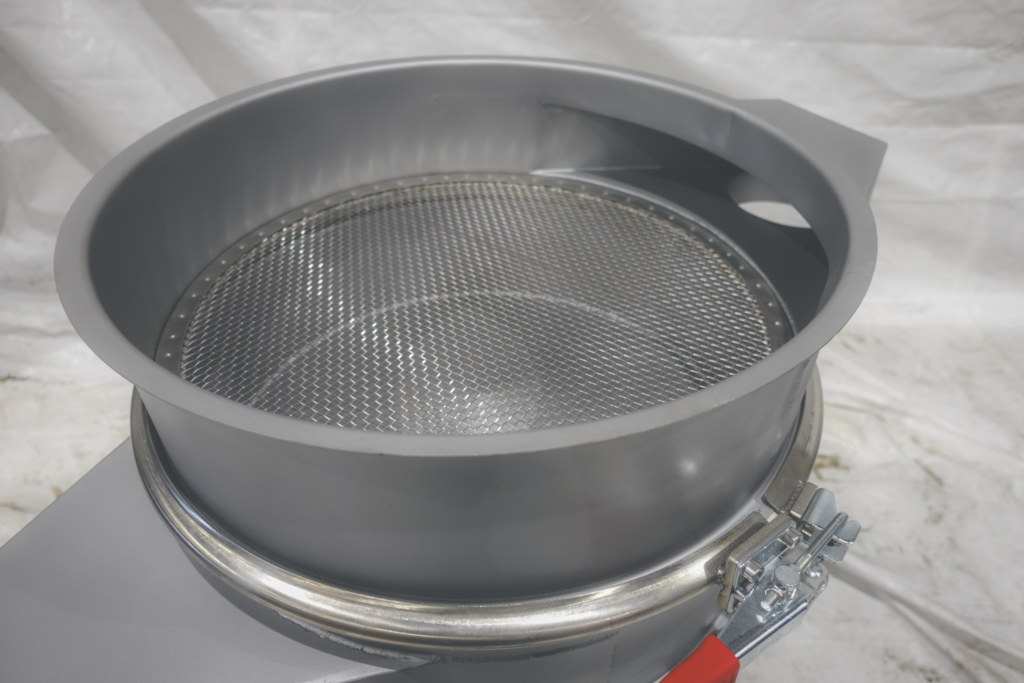
Why Screening Defines Process Performance
Across modern industrial processing, whether in plastics recycling, chemical production, food manufacturing, or waste recovery, screening plays a critical role in determining:
- Final product quality
- Process stability
- Material flow efficiency
- Downstream equipment performance
Despite this, screening is frequently treated as a secondary consideration.
At Rotajet, screening is approached differently.
Rather than supplying a standalone vibro-sieve or sifter, Rotajet engineers complete screening systems designed to operate as part of an integrated process. Because in real-world applications, screening performance is not determined by the sieve alone; it is defined by how the entire system is designed, fed, and controlled.

Understanding Vibro-Sieve and Industrial Sifter’s Usage
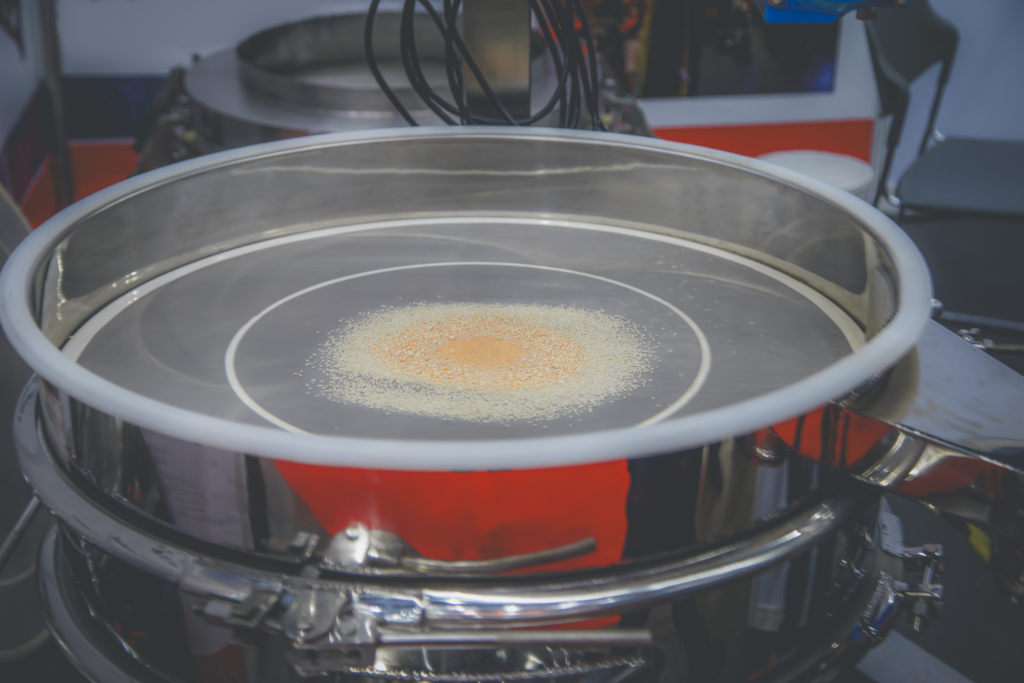
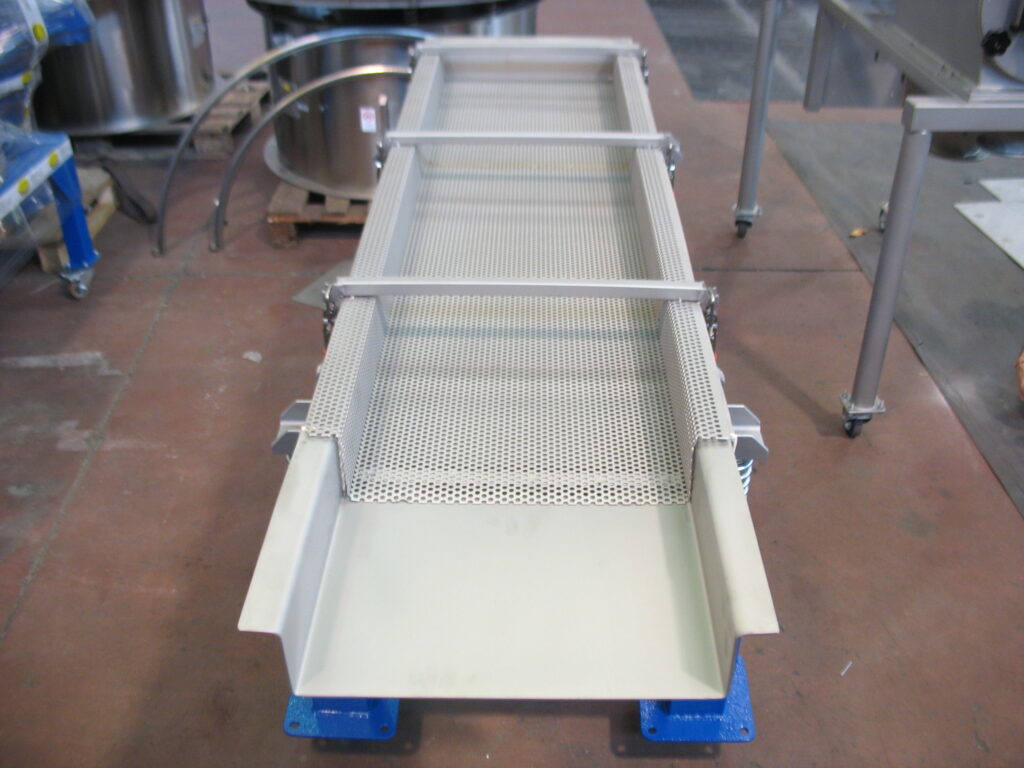
A vibro-sieve and a sifter are designed to separate materials based on particle size using controlled vibration and mesh filtration.
Typical applications include:
- Separating fines from bulk materials
- Removing contamination
- Grading materials into defined size fractions
- Protecting downstream equipment
Industrial systems must handle:
- Variable feed rates
- Mixed contamination streams
- Moist or sticky materials
- Abrasive or irregular particles
Rotajet addresses these challenges by integrating screening into a broader engineered solution rather than treating it as an isolated function.
From Equipment Supplier to Process Engineer
Most suppliers focus on selling machines. Rotajet focuses on delivering process performance. This is reflected in how systems are designed, specified, and deployed. Rather than starting “What size sieve do you need?” Rotajet starts with:
- What material are you processing?
- What condition is it in before screening?
- What output specification is required?
- What happens before and after the sieve?
This approach ensures that every vibro-sieve or sifter is:
- Correctly sized
- Properly fed
- Integrated into the wider system
The Limitations of a Standalone Vibro-Sieve
Standalone installations are one of the most common causes of underperformance.
Typical issues include:
- Inconsistent feed rates
- Incorrect mesh specification
- Material arriving in unsuitable condition
- Lack of upstream preparation
- No integration with downstream handling
These issues lead to:
- Mesh blinding
- Reduced separation accuracy
- Increased maintenance
- Operator dependency
This is not a limitation of the sieve itself, it is a limitation of system design.
Fully Integrated Engineering
Rotajet delivers screening systems that are engineered as part of a complete process line.
These systems are designed to include:
- Controlled feed mechanisms
- Integrated conveyors or screw systems
- Support structures and access platforms
- Dust extraction or containment where required
- Electrical control panels and automation
- Safety interlocks and guarding
This ensures that screening performance is stable, repeatable, and aligned with the overall process.
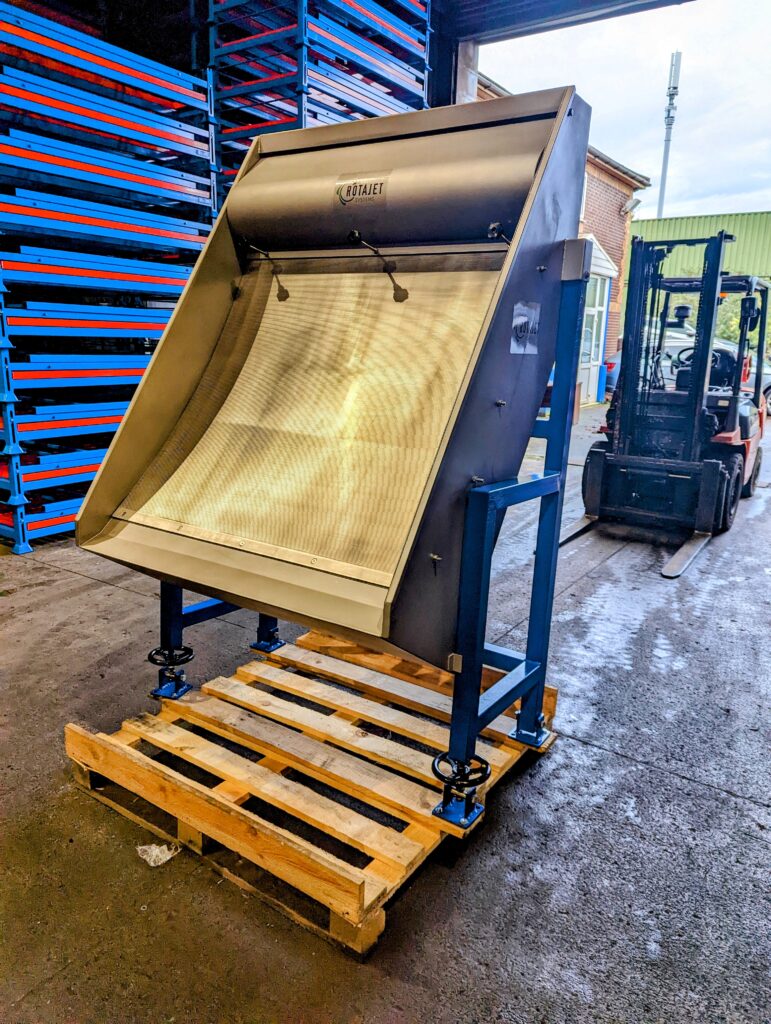
Screening Within Complete Process Lines
Screening rarely operates in isolation. In most industrial environments, it is positioned within a wider system that may include:
- Size reduction
- Washing or degreasing
- Separation and classification
- Drying
Rotajet designs complete process solutions across multiple sectors; by integrating screening into these systems, Rotajet ensures that material entering the sieve is already optimised for separation.
The Key to Screening Performance
One of the most overlooked aspects of screening is material preparation. Attempting to solve screening issues at the sieve stage alone is rarely effective. Instead, performance is significantly influenced by:
- Moisture content
- Surface contamination
- Particle uniformity
- Bulk density
For example, when materials are processed through the Rotajet RJ-Turbo prior to screening:
- Contamination is removed
- Particle consistency improves
- Flow characteristics become more stable
In processing environments such as AD waste streams, plastics can carry significant levels of moisture and organic residue . Without preparation:
- Material adheres to mesh surfaces
- Separation efficiency becomes inconsistent
- Maintenance requirements increase
Rotajet addresses this by designing systems where washing and screening operate as a combined solution.
Practical Differences
Although often used interchangeably, a vibro-sieve and sifters can serve different roles depending on application.
Vibro-Sieve
- Typically used for heavier materials
- Suitable for wet or contaminated streams
- Often integrated into recycling and industrial processing lines
Industrial Sifter
- More commonly used in fine or dry applications
- Used in food, powders, and pharmaceuticals
- Focused on precision separation
Rotajet systems can be configured for both, depending on material requirements and process conditions.
Rental as a Strategic Approach to Screening
Rental has become an increasingly important part of industrial equipment strategy. Rather than committing to fixed systems, businesses are adopting flexible approaches that allow:
- Process validation
- Capacity adjustments
- Short-term deployment
- Reduced capital exposure
Within screening applications, this is particularly valuable due to:
- Variability in material
- Changing production requirements
- Uncertainty in initial system sizing
Rotajet supports this by offering vibro-sieve and sifter systems as part of a broader engineered rental solution.
Compliance and Regulatory Considerations
Industrial screening systems must align with UK regulatory requirements. Relevant guidance includes:

Rotajet systems are designed with these requirements in mind, ensuring safe and compliant operation across industries.
Rotajet Capability Across Industries
Rotajet screening systems are deployed across a wide range of sectors, including:
- Plastics recycling
- Food processing
- Chemical manufacturing
- Waste management
- Environmental processing
Each system is adapted to the specific challenges of the application, ensuring consistent and reliable performance.
Screening performance is not determined by the sieve alone. It is the result of:
- Material preparation
- System design
- Process integration
- Correct equipment selection
Rotajet’s approach focuses on delivering complete, engineered screening systems that operate effectively within real industrial environments.
Mesh Selection, Throughput Engineering & System Design
The Most Critical Variable
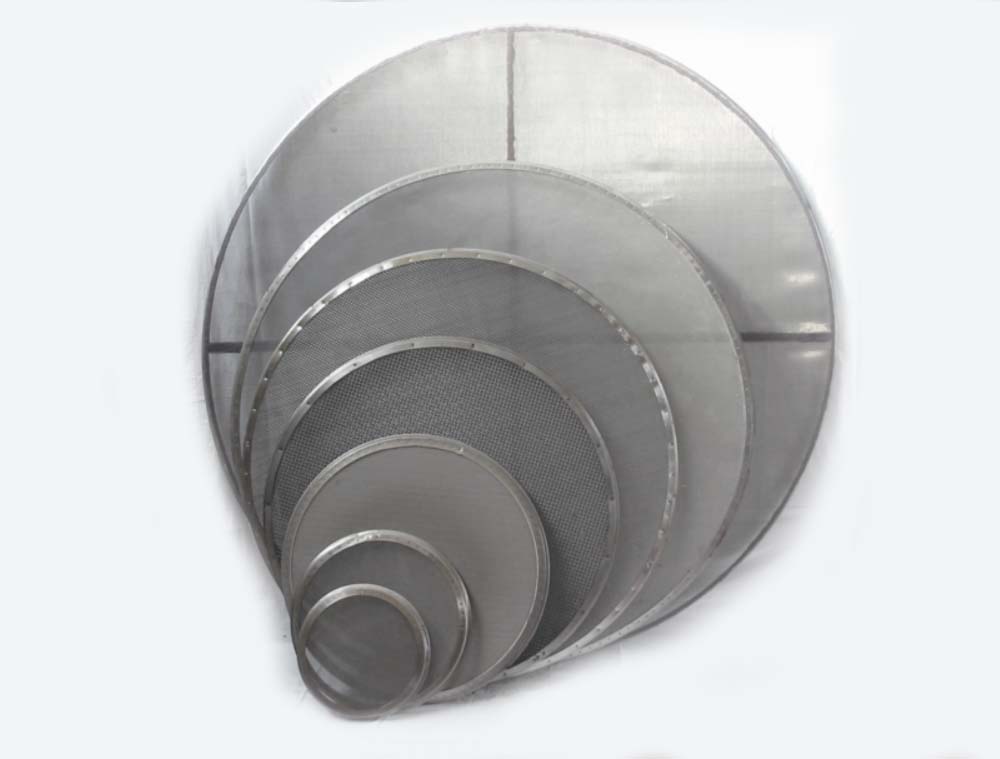
Mesh selection is the single biggest factor influencing screening performance.
In many installations, mesh is chosen based on:
- Nominal particle size
- Previous supplier recommendations
- Trial and error
This approach often leads to unstable operation.
At Rotajet, mesh selection is treated as an engineering decision based on material behaviour under real operating conditions, not just nominal size.
Key Factors That Influence Mesh Selection
Particle Size Distribution
Material is rarely uniform. Instead of a single size, most materials consist of:
- Oversize fraction
- Target fraction
- Fines
A correctly specified mesh must:
- Allow the target fraction to pass efficiently
- Retain oversize without blockage
- Avoid excessive loss of fines
Particle Shape
Irregular particles behave very differently to spherical ones.
- Flat particles may “bridge” mesh openings
- Fibrous material can interlock
- Sharp edges can increase wear
This is particularly relevant in recycling systems linked to Size Reduction machinery, where shredded material varies significantly in shape and consistency.
Moisture Content
Moisture has a major impact on screening behaviour.
- Dry materials flow freely
- Damp materials begin to adhere
- Wet materials can blind the mesh
In systems where material is processed through washing stages, mesh selection must account for:
- Residual moisture
- Surface contamination
- Flow characteristics post-wash
Contamination Type
Organic contamination, oils, and residues change how material interacts with the mesh. In applications involving degreasing or oil removal, material may carry:
- Oil films
- Sticky residues
- Fine particulate contamination
These factors influence:
- Open area utilisation
- Cleaning frequency
- Mesh durability
Rotajet Approach to Mesh Selection
Rather than selecting mesh in isolation, Rotajet evaluates:
- Material samples
- Process conditions
- Upstream preparation
Where required, testing can be carried out alongside integrated systems, including friction washing using the
Rotajet RJ-Turbo; this ensures mesh selection is aligned with real operating conditions, not theoretical assumptions.
Mesh Types and Their Applications
Woven Wire Mesh
- Suitable for general industrial applications
- Good balance between strength and open area
- Widely used in dry and semi-dry screening
Perforated Plate
- Higher durability
- Suitable for abrasive materials
- Lower open area compared to woven mesh
Synthetic Mesh (Nylon / Polyurethane)
- Used in specialist applications
- Reduced blinding in certain conditions
- Suitable for fine or sensitive materials
Throughput Engineering
Throughput is often simplified to a single number.
In practice, it is influenced by multiple interacting factors:
- Material characteristics
- Feed consistency
- Mesh selection
- Machine configuration
- Vibration parameters
The Importance of Controlled Feed
One of the most common causes of poor screening performance is inconsistent feeding. Without control:
- Material floods the mesh
- Separation efficiency drops
- Wear increases
Rotajet systems incorporate controlled feed mechanisms as part of the overall design, this may include:
- Screw feeders
- Vibratory feeders
- Conveyor-fed systems
Wet vs Dry Screening: Engineering Differences
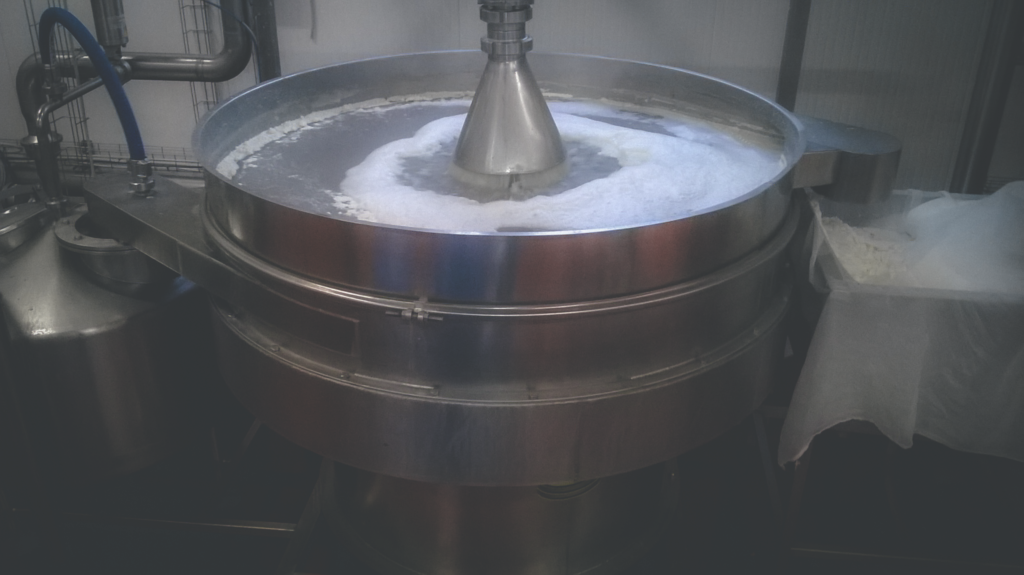
The choice between wet and dry screening has a major impact on system design.
Dry Screening
Used in:
- Powder handling
- Food processing
- Fine material separation
Advantages:
- Simpler system design
- No water management required
Challenges:
- Dust control
- Static build-up
- Fine particle handling
Wet Screening
Used in:
- Plastics recycling
- Waste processing
- Contaminated material streams
Advantages:
- Improved separation of sticky materials
- Reduced dust
- Better handling of contaminated streams
Challenges:
- Water management
- Slurry handling
- Integration with washing systems
Rotajet frequently integrates wet screening into full process lines, particularly in recycling applications linked to:
The Hidden Performance Lever
Screening performance is heavily influenced by vibration characteristics:
- Amplitude
- Frequency
- Motion type
Incorrect settings can result in:
- Poor material stratification
- Reduced separation accuracy
- Increased wear
Rotajet systems are configured to match vibration behaviour to:
- Material type
- Mesh selection
- Throughput requirements
Common Engineering Mistakes in Vibro-Sieve Systems
Across industry, several recurring issues are observed:
1. Oversimplified Sizing
Selecting a vibro-sieve based purely on nominal throughput without considering:
- Material variability
- Feed consistency
- Process integration
2. Ignoring Upstream Preparation
Failing to address:
- Moisture
- Contamination
- Particle uniformity
This is particularly critical in systems involving Drum Washing and other cleaning processes.
3. Lack of Integration
Installing a sieve without:
- Controlled feed
- Proper discharge handling
- System-level control
4. Incorrect Mesh Specification
Using mesh that is:
- Too fine (leading to blockage)
- Too coarse (leading to poor separation)
5. No Provision for Maintenance
Failure to consider:
- Mesh access
- Cleaning requirements
- Wear components
Rotajet Engineering Philosophy in Practice
Rotajet addresses these challenges by designing screening systems that include:
- Integrated feed systems
- Correct mesh selection based on testing
- Full process integration
- Consideration of upstream and downstream equipment
- Robust mechanical design for industrial environments
Integration with Wider Rotajet Systems
Screening is often combined with:
- Size reduction
- Washing
- Separation
- Drying
This allows Rotajet to deliver complete process solutions rather than isolated equipment. Relevant system areas include:
- https://plasticwashing.co.uk/
- https://plasticwashing.co.uk/size-reduction/
- https://degreasingmachines.com/
- https://drumwashing.com/
High-performance screening depends on:
- Correct mesh selection
- Stable and controlled feed
- Proper material preparation
- Integration into a wider process
Rotajet’s approach ensures that vibro-sieve and sifter systems are engineered to perform under real operating conditions, not just theoretical specifications.
Industry Applications, System Configurations & Deployment Strategy
Introduction: Why Application-Specific Design Determines Success
A vibro-sieve and a sifter do not perform the same across industries. The same machine, with the same mesh, can behave completely differently depending on:
- Material type
- Contamination level
- Moisture content
- Upstream processing
This is why Rotajet does not offer generic screening solutions. Instead, every system is engineered based on application-specific requirements, ensuring performance is aligned with real operating conditions.
Plastics Recycling: High Contamination, Variable Material
The Challenge
Plastics recycling presents one of the most demanding screening environments:
- Mixed polymer streams
- Organic contamination
- Variable particle sizes
- Moisture from washing stages
Material is rarely consistent, especially when sourced from:
- Post-consumer waste
- AD depackaging streams
- Industrial scrap
Rotajet System Configuration
In plastics applications, screening is typically integrated into a full wash line:
- Size reduction stage
- Friction washing
- Vibro screening
- Drying and separation
Role of Screening
In this environment, a vibro-sieve is used to:
- Remove fines and contamination
- Classify material size
- Improve downstream drying efficiency
Material preparation is critical, often achieved using the Rotajet RJ-Turbo, which ensures:
- Reduced contamination
- Improved flow characteristics
- More stable screening performance
Key Engineering Considerations
- Wet screening configuration
- Mesh resistant to blinding
- Controlled feed from wash stage
- Integration with water management systems
Food & Powder Processing: Precision and Hygiene
The Challenge
Food and powder applications require:
- Fine separation accuracy
- Hygienic design
- Consistent product quality
Materials may include:
- Flour
- Sugar
- Spices
- Additives
System Requirements
- Stainless steel construction
- Fine mesh selection
- Dust control systems
- Easy-clean design
Screening Function
In these applications, sifters are used for:
- Removing oversize contamination
- Ensuring product consistency
- Protecting downstream equipment
While Rotajet’s core strength is industrial processing, screening systems can be adapted for these environments where required.
Chemical & Industrial Processing: Handling Complex Materials
The Challenge
Chemical processing introduces materials that may be:
- Sticky
- Oily
- Reactive
- Fine or agglomerated
Screening Role
- Removing agglomerates
- Separating contaminants
- Controlling product quality
Rotajet System Design
Systems are engineered with:
- Appropriate material compatibility
- Consideration of contamination type
- Integration with upstream cleaning or washing
Waste & Environmental Processing: Unpredictable Inputs
The Challenge
Waste streams are among the most variable materials encountered in screening:
- Mixed composition
- High contamination levels
- Variable moisture
- Irregular particle shapes
Typical Sources
- Municipal waste
- AD depackaging systems
- Industrial waste streams
Rotajet Configuration
Screening systems are integrated into broader processing lines, often including:
- Washing stages
- Separation systems
- Material recovery processes
Screening Objectives
- Remove unwanted fractions
- Recover valuable material
- Improve downstream processing efficiency
Drum & IBC Processing: Supporting Cleaning and Recovery
Screening also plays a role in container processing systems.
Screening can be used to:
- Remove solids from wash water
- Separate residues
- Support water recirculation systems
This ensures:
- Cleaner process water
- Reduced maintenance
- Improved system efficiency
System Configuration: How Rotajet Designs for Each Industry
Rotajet systems are not standardised packages. Each system is configured based on:
1. Material Flow Path
- Infeed method
- Screening stage
- Discharge routes
2. Integration Requirements
- Upstream equipment
- Downstream processes
- Physical layout
3. Environmental Considerations
- Wet vs dry operation
- Dust control
- Water handling
4. Operational Requirements
- Throughput
- Maintenance access
- Automation level
From Concept to Operation
A successful screening system requires more than equipment delivery. Rotajet follows a structured deployment approach:
Stage 1: Process Understanding
- Material assessment
- Application review
- System objectives
Stage 2: System Design
- Equipment selection
- Integration planning
- Layout development
Stage 3: Build and Test
- System assembly
- Internal testing
- Performance validation
Stage 4: Installation and Commissioning
- Delivery to site
- Installation support
- Operational setup
Stage 5: Optimisation
- Fine-tuning performance
- Adjusting parameters
- Supporting ongoing operation
Rental in Practice: Real-World Flexibility
Rental systems are deployed in a variety of scenarios:
- Temporary capacity increases
- New process trials
- Replacement of underperforming equipment
- Bridging lead times for permanent systems
This allows businesses to:
- Evaluate performance under real conditions
- Adjust system configuration
- Reduce operational risk
Integration Across Rotajet Platforms
One of the key advantages of working with Rotajet is the ability to integrate screening with:
- Washing systems
- Size reduction systems
- Degreasing systems
- Container cleaning systems
This allows complete process lines to be engineered as a single solution. Screening performance varies significantly across industries. Success depends on:
- Application-specific design
- Proper system configuration
- Integration with upstream and downstream processes
Rotajet delivers screening systems that are engineered to operate effectively within the realities of each industry.
Commercial Strategy, Cost Control & Long-Term Performance
Why Commercial Strategy Matters as Much as Engineering
Selecting the correct vibro-sieve or sifter is only part of the decision. The way the system is funded, deployed, and managed over time has a direct impact on:
- Operational efficiency
- Cash flow
- Process flexibility
- Long-term scalability
At Rotajet, screening systems are positioned not just as equipment, but as operational assets within a wider processing strategy.
The Shift in Industry
Across industrial sectors, there is a clear shift in how equipment is deployed.
Traditional approach:
- Purchase equipment
- Install permanently
- Adapt process around fixed capacity
Modern approach:
- Deploy systems aligned with production needs
- Maintain flexibility
- Optimise performance over time
This is particularly relevant in screening applications where:
- Material inputs vary
- Throughput requirements change
- Processes evolve
Vibro-Sieve Rental
Rental allows screening systems to be deployed as part of an adaptive process strategy rather than a fixed installation. This approach is commonly used in:
- Recycling facilities
- Waste processing operations
- Chemical and industrial plants
- Contract processing environments
Key Operational Advantages
1. Deployment Speed
Rental systems can be introduced without the delays typically associated with full capital projects. This is particularly useful where screening capacity is required quickly or where existing systems are underperforming.
2. Process Validation
Rental allows systems to be tested under real operating conditions. This enables:
- Validation of mesh selection
- Assessment of throughput
- Identification of process improvements
3. Adaptability
As production requirements change, rental systems can be:
- Reconfigured
- Replaced
- Expanded
This is important in industries where material streams are not consistent.
4. Reduced Capital Commitment
Rental reduces the need for large upfront investment, allowing capital to be allocated to other areas of the operation.
Purchase vs Rental: Engineering vs Financial Perspective
The decision between purchasing and renting is not purely financial — it is also operational.
Purchase Model
Typically suited for:
- Stable, long-term processes
- Fixed production environments
- Established material streams
Advantages:
- Long-term asset ownership
- Full system control
Considerations:
- Higher upfront investment
- Less flexibility if process changes
- Greater responsibility for maintenance and upgrades
Rental Model
Typically suited for:
- Variable production
- New or evolving processes
- Trial and optimisation phases
Advantages:
- Flexibility
- Reduced upfront cost
- Ability to validate performance
Considerations:
- Ongoing operational cost
- Requires clear planning for long-term use
Aligning Equipment with Process Evolution
Rotajet supports a staged approach to system deployment:
Initial Deployment
- System introduced into process
- Performance evaluated
- Parameters adjusted
Optimisation
- Mesh refined
- Feed systems adjusted
- Integration improved
Long-Term Strategy
- Continue rental
- Transition to purchase
- Expand system capacity
This approach ensures that the final system is aligned with actual operational requirements rather than initial assumptions.
Lifecycle Cost Considerations
When evaluating screening systems, focusing solely on purchase price can be misleading. Total lifecycle cost includes:
- Installation
- Integration
- Maintenance
- Downtime
- Performance efficiency
Key Cost Drivers
1. Material Preparation
Poorly prepared material increases:
- Mesh wear
- Maintenance frequency
- Operational instability
2. Contamination Levels
High contamination affects:
- Cleaning requirements
- Component lifespan
- Process efficiency
In applications involving oils or residues, integration with systems linked to Degreasing Machines, can improve overall performance.
3. System Integration
Standalone equipment often leads to:
- Inefficiencies
- Increased handling
- Additional labour
Integrated systems, such as those found in the link below, are designed to minimise these issues.
Scalability: Designing for Growth
One of the most important commercial considerations is scalability. A system that works today must also support future requirements.
Rotajet Approach to Scalability
Systems are designed to allow:
- Additional screening capacity
- Integration of extra stages
- Expansion of process lines
This is particularly relevant in sectors such as:
- Plastics recycling
- Waste processing
- Industrial manufacturing
Modular Integration
Screening systems can be expanded alongside:
- Washing systems
- Separation stages
- Drying systems
Operational Control and Process Stability
A key advantage of integrated screening systems is improved process control. This includes:
- Consistent feed rates
- Stable separation performance
- Reduced operator intervention
Control Systems
Rotajet systems can include:
- Centralised control panels
- Integration with existing plant systems
- Monitoring of key parameters
Maintenance Strategy
Well-designed systems allow:
- Easy access to mesh and components
- Planned maintenance schedules
- Reduced unplanned downtime
Risk Management in Screening Systems
Screening systems can introduce risk if not properly designed or integrated. Common risks include:
- System underperformance
- Unexpected downtime
- Incompatibility with material
How Rotajet Mitigates Risk
- System design based on application
- Integration across full process
- Ability to test systems through rental deployment
- Ongoing optimisation support
Integration Across Rotajet Platforms
Screening is rarely a standalone requirement. Rotajet provides integration across multiple system types. This enables complete process lines to be engineered as a single solution, improving overall efficiency and performance. Commercial decisions around screening systems are as important as technical ones. Key factors include:
- Flexibility of deployment
- Lifecycle cost
- Scalability
- Process integration
Rotajet’s approach ensures that vibro-sieve and sifter systems are aligned with both operational requirements and long-term strategy.
FAQs
1. What is a vibro-sieve and how does it work?
A vibro sieve is a screening machine that uses controlled vibration to separate materials based on particle size. Material is fed onto a mesh screen, and vibration causes smaller particles to pass through while larger particles are retained.
In industrial systems, vibro-sieves are rarely standalone. At Rotajet, they are typically integrated into full processing systems such as:
https://vibratingsieves.co.uk/separation-machinery-products/
This ensures consistent feed, stable performance, and proper discharge handling.
2. What is the difference between a vibro-sieve and a sifter?
A vibro sieve generally handles heavier, more industrial materials and can be used in wet or contaminated environments.
A sifter is typically used for finer, dry materials such as powders in food or chemical processing.
Rotajet systems can be configured for both, depending on the application requirements defined here:
https://vibratingsieves.co.uk/applications/
3. What industries use a vibro-sieve?
Vibro sieves are used across multiple industries, including:
- Plastics recycling
- Food processing
- Chemical manufacturing
- Waste processing
- Environmental applications
These applications are explored in more detail here:
https://vibratingsieves.co.uk/applications/
4. How can a vibro-sieve underperform?
Underperformance is usually caused by system issues rather than the sieve itself.
Common causes include:
- Poor material preparation
- Incorrect mesh selection
- Inconsistent feed
- Lack of integration
Rotajet addresses this by designing complete systems rather than supplying standalone machines.
5. How important is mesh selection?
Mesh selection is critical.
Incorrect mesh can lead to:
- Blinding
- Poor separation
- Reduced throughput
Rotajet evaluates mesh based on material behaviour and process conditions, often alongside upstream systems such as:
https://plasticwashing.co.uk/
6. What causes mesh blinding?
Mesh blinding occurs when material blocks the openings of the screen.
It is often caused by:
- Moisture
- Sticky contamination
- Fine particles
This is why material preparation using systems such as:
https://plasticwashing.co.uk/size-reduction/
or washing stages is important.
7. Can a vibro-sieve handle wet material?
Yes, vibro sieves can be configured for wet screening.
This is common in recycling and waste processing applications, particularly when integrated with washing systems:
https://plasticwashing.co.uk/
8. What is the role of screening in plastics recycling?
Screening is used to:
- Remove fines
- Separate materials
- Improve downstream processing
It is typically integrated into full systems alongside size reduction and washing:
https://plasticwashing.co.uk/size-reduction/
9. How does material preparation affect screening?
Material preparation improves:
- Flow characteristics
- Separation efficiency
- System stability
For example, using the
Rotajet RJ-Turbo
before screening helps remove contamination and improve performance.
10. What throughput can a vibro sieve achieve?
Throughput depends on:
- Material type
- Mesh size
- Feed rate
- Moisture content
Rotajet systems are designed based on real operating conditions rather than fixed assumptions.
11. Why is controlled feed important?
Controlled feed ensures:
- Even distribution across the mesh
- Stable operation
- Reduced wear
Rotajet integrates feed systems into screening solutions:
https://vibratingsieves.co.uk/separation-machinery-products/
12. What is wet screening?
Wet screening uses water to assist separation.
It is used when:
- Material is sticky
- Dust needs to be controlled
- Contamination needs to be removed
13. What is dry screening?
Dry screening is used for:
- Powders
- Fine materials
- Food and chemical applications
It requires dust control and careful handling.
14. Can a vibro-sieve be used in food processing?
Yes, provided they are designed for hygienic use.
This includes:
- Stainless steel construction
- Easy cleaning
- Fine mesh selection
15. What maintenance do vibro sieves require?
Maintenance typically includes:
- Mesh inspection
- Cleaning
- Checking vibration components
- Monitoring wear parts
Proper system design reduces maintenance frequency.
16. How long does mesh last?
Mesh lifespan depends on:
- Material type
- Abrasiveness
- Operating conditions
Correct system design helps extend mesh life.
17. What is the benefit of rental over purchase?
Rental allows:
- Process validation
- Flexibility
- Reduced upfront cost
This is particularly useful for changing or uncertain processes.
18. When should you buy instead of rent?
Purchase is suitable when:
- Process is stable
- Requirements are fixed
- Long-term operation is confirmed
19. Can screening systems be expanded?
Yes, Rotajet systems are designed for scalability.
They can be expanded alongside other process stages such as:
https://plasticwashing.co.uk/
20. How does screening fit into a full process line?
Screening is typically positioned between:
- Upstream preparation (size reduction or washing)
- Downstream processing (drying or separation)
21. What causes inconsistent separation?
Inconsistent separation is often caused by:
- Variable feed
- Incorrect mesh
- Poor material preparation
22. Can vibro sieves remove contamination?
Yes, they can remove:
- Oversize particles
- Fines
- Unwanted materials
23. What materials can be screened?
Common materials include:
- Plastics
- Powders
- Chemicals
- Food products
- Waste streams
24. What is the role of vibration in screening?
Vibration helps:
- Move material across the mesh
- Separate particles
- Prevent blockage
25. How is vibration controlled?
Vibration is controlled through:
- Motor settings
- Frequency adjustment
- Machine configuration
26. What is screening efficiency?
Screening efficiency refers to how effectively material is separated.
It depends on:
- Mesh selection
- Feed consistency
- Material condition
27. Can screening systems be automated?
Yes, systems can include:
- Automated feed
- Control panels
- Monitoring systems
28. What is the role of screening in waste processing?
Screening helps:
- Recover materials
- Remove contaminants
- Improve process efficiency
29. Can a vibro-sieve handle abrasive materials?
Yes, with correct mesh and construction.
Perforated plates or reinforced mesh may be used.
30. What is the difference between single and multi-deck sieves?
- Single deck: one level of separation
- Multi-deck: multiple size fractions
31. How do you size a vibro-sieve?
Sizing is based on:
- Throughput
- Material properties
- Process requirements
32. What is oversize and undersize material?
- Oversize: material retained on the mesh
- Undersize: material passing through
33. Can a vibro-sieve be integrated with washing systems?
Yes, this is common in recycling systems:
https://plasticwashing.co.uk/
34. What industries benefit most from screening systems?
Industries with variable material streams benefit most, including recycling and waste processing.
35. What is system integration?
System integration means combining:
- Screening
- Feeding
- Discharge
- Control
into one engineered solution.
36. Why is integration important?
Integration ensures:
- Consistent performance
- Reduced manual handling
- Improved efficiency
37. Can screening improve product quality?
Yes, by removing unwanted material and ensuring consistent size distribution.
38. What is the role of screening in degreasing systems?
Screening can remove solids from wash systems, supporting processes linked to:
https://degreasingmachines.com/
39. Can screening systems handle mixed materials?
Yes, but system design must account for variability.
40. How do you ensure long-term performance?
Long-term performance of a vibro-sieve depends on:
- Correct system design
- Proper integration
- Regular maintenance
Rotajet systems are engineered with these factors in mind across full process solutions.